
Gomorra – this is ‘real greaseball shit’

Gomorrah header

One of the best sequences and lines in movie history comes from Goodfellas. Henry Hill, played by Ray Liotta, narrates over the death sequence of his friend Tommy DeVito, who, thinking he’s going to get made, is murdered in revenge for killing Billy Batts, a made man. Hill describes it as ‘real greaseball shit’ and that it was ‘among the Italians’. In this context, it’s a euphemism for resolving disputes between Mafiosi of pure Sicilian blood.

Such acts of exclusivity became an effective means for the Italian American mafia to protect its purity and traditions. Contrast this with Gomorra, the TV series, and these rituals and mores appear meagre by comparison. Why? The Camorra’s rules extend over entire sections of society, not just its own members. It survives and thrives by any means necessary and whatever it costs others, and that’s what the two screen adaptations of Gomorra have emphasized so emphatically.

Where Gomorra La Serie differs from the film is by focusing on portraying a fictitious, but plausible, character driven narrative and adopting a more intricate plot within its aesthetic. The authenticity of the subject is vindicated by the book, which both the movie and TV series is adapted from, released in 2006, as it pissed off the real Camorra. So much so that the author, Roberto Saviano, had to be escorted by body guards for a period. You can understand the Camorra’s dissatisfaction, his depiction of the grotesque and cynical means with which they seize and control their territories, and how their mendacious presence has exacerbated the decay of the slums (their turf, as it were) into Dickensian realms of poverty and addiction was uncompromisingly brave, traits they seldom encounter in opposition. Gomorra’s visual interpretation is itself a statement, and can be considered even more scathing than the novel. Its representation of the Camorra’s nasty and barbaric acts, particularly the killings, the sheer number of them and the brazen disposability of people, aka the ‘real greaseball shit’, leaves little to the imagination and therefore eviscerates any potential continuation of glib cultural misconceptions of Camorra activity.

All the viewer is left with is a bleak cascade of cynicism, greed, betrayal and death. In this sense ‘Gomorra’ shares traits with The Wire, also mirroring its episodic approach that documents the negative effects of organised crime on each character in their particular echelon. I’ve only watched the first six episodes of season one, but so far Gomorra has purposely eschewed, probably due to budget, the expansive and overt sociological scope or cultural introspection of The Wire’s now complete opus. It certainly isn’t The Sopranos, which documented the changes in American and particularly Italian American culture throughout the noughties. By using comedic interludes and caricatures, The Sopranos became a sumptuous tragi-comedy, which is also a comfier means of parodying the romanticised idea of mafia crime, developed by generations lionising the exploits of Al Capone and John Gotti, and turning the Godfather trilogy and Martin Scorsese’s movies into vapid cultural clichés.

However, Gomorra’s existence has plenty to thank for our obsession with mafia crime. Here it’s offering an antidote to this through a damming political, cultural and moral commentary using the traditional conduit of characterisation. In doing so it doesn’t piously chide the viewer as a documentary often can. Gomorra knows its viewers are adults. We already understand that until drugs are decriminalised organised crime syndicates of this ilk will benefit. Even so the grime and degradation of the Neapolitan slums smack you in the face like a still alive Salmon being swung by Mike Tyson circa 1987.

The topography and scars of the slums reveal a legion of untold horror stories; mini shrines made of candles, pictures of the deceased and Virgin Mary statues are abundant on landings, there are bullet holes galore, everything is filthy, the damp rises, concrete crumbles, hypodermic needles, rubbish and litter are abundant, swimming pools are abandoned, and grass embankments are over grown. You can almost smell the five day old dried piss mixed with the rising stench of blocked sewage pipes fizzing in the midday sun. There must be some nice places in Naples, but there isn’t any where the Camorra operates. Even the Savatasano mansion is a garishly nuevo-riche over-compensation to renounce their operational philistinism.
ciro genny

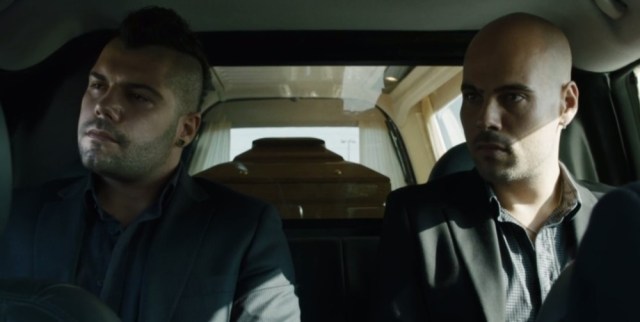
Watching how the Savatasano family, and their ambitious henchman Ciro, operate and manipulate the Camorra’s savage matrix best they can, is where this show shines. To date, as I’m one of uninitiated, all of main characters retain an arcane quality. This is aided by a realistic device, omerta – a code of silence relating to Camorra activities, giving them near impunity to do as they please. There’s a related sub-plot that’s been running in the background throughout season one, which will no doubt be part of the first season’s climax, there’s a rat among the clan’s higher ups who’s negotiating their terms with the police.

You suspect this may be Ciro, a capable, loyal captain of Savastanos, and appointed consigliere and mentor for the Savastano heir Genny, who is the point man for much of their dirtiest and most dangerous work. The increasing distance and lack of trust he receives from the Savastano’s makes him start to question the wisdom of their leadership and his allegiance to them. But, like Don Pietro and Lady Imma Savastano, Ciro is a real heartless piece of shit. He looks people in the eye intensely and at close range, almost comically so, no doubt as a means of engendering trust and or a way of deciphering if someone is lying.

I found myself having a tinge of sympathy for the Salvastano heir Gennaro ‘Genny’. Genny is the self-entitled, spoiled, brattish, childish moderately clichéd fat bastard twatcunt who you suspect will have to change his hedonistic ways, or his pushy parents will change it in an effort to retain their empire and legacy. So far Genny is clearly ill-equipped for the life of a Camorra leader, finding himself unwillingly trapped into responsibilities and tasks by duty to the family name. The insertion of Genny high within the Camorra organisation presents a truism, there’s complete futility in placing significant faith in the idea of finding meaning through succession and loyalty in an illegal industry, when opportunity and aspiration often conflate to work against its success.

Speaking of success, Don Pietro Savastano clearly is and has been in situ for a while, though he doesn’t look remotely close to how I’d imagine the head of a Camorra clan leader would. He has no visible scars, wears glasses, and dresses like a hedge fund manager who’s on his day off. The crack in this benign façade is the employment of angry bird eyebrows that emboldens his Sam the Eagle frown, which when married with his banker phenotype conveys a ‘I’m sick of having to explain why this is a good idea to my utterly stupid superiors’ irritation. He’s as self-righteously assured as Tony Blair circa 2002 and just as motivated by self-interest and self-preservation.

A safe drinking game would involve counting the number of times Don Pietro genuinely laughs or looks remotely happy. For recovering alcoholics it’s as guaranteed as route to sobriety as you’d find. All jokes aside, there’s no humour to be found in Gomorra, not even the dark variety. While the show is clearly not asking us to emphasize with Don Pietro or anyone else, his tired disposition tells us how much pressure the head of the clan is placed under, and how joyless an existence he lives.

So it’s no surprise that Don Pietro’s first instinct is to scorch the earth of all possible competitors. He pouts when he doesn’t get his way, which is only in front of his wife ‘Lady Imma’ who’s as close to his equal as is possible. Everyone else falls in line, and they’re fine with this, and you are too, because you’re as terrified of what he might do to any of the other characters as they are of him.

Because he constantly lives under the threat of assassination or imprisonment, Don Pietro’s wife, Lady Imma, represents the family’s only realistic chance of maintaining operational control in the succession model. Even in a world dominated by chauvinism, the threat of death and intimidation, she proves to be just as ruthless, scheming and manipulative as Don Pietro, and manages to wield authority with the same success. We can glean from this that the Savastano family have remained in charge because they’re cleverer than their competitors, and that mass loyalty is adhered to in a Camorra syndicate as long as its leadership is perceived to be stable.

Gomorra goes one step further than criticism of the Camorra and the societal indifferences that allows them to flourish. It places you vis-à-vis with humanity’s barbarism, that it’s still inherent and quite easy to emancipate when living in a cyclical mincer of fear, despair and violence. Gomorra’s brand of grimly, realistic almost dystopian ‘greaseball shit’ ups the ante and leaves you nowhere to look but right at it, transfixed with intrigue at this alien way of life.
Posted in TV | Tagged , , , , , , , , , , , , , , , , , , | Leave a comment

Song Of The Day – The Comeback by Alex Cameron

From the album ‘Jumping The Shark’ (2014)

Posted in Song Of The Day | Tagged , , , , , , , | 1 Comment

Lamentations of a hypochondriac

Lamentations of a hypochondriac

A returning twinge in my back

And my mood swivels, just like that

Ahh! Veins beginning to swell,

With blood that’s hot as hell

Now my heart’s racing

At the deadly disease I’m facing

My chest feels like a chasm

And my muscles are starting to spasm

Take a breath, I’m not going insane

Oh fuck, there it is again

In the exact same location!

So I procrastinate, then abstain,

From thinking it’s a malignant pain

Shit! An even bigger palpitation!

It’s migrated up to my armpit!

What if it’s at an advanced stage!

And this is its latent rage?

I try to think of a way to get over it

But I end up watching Embarrassing Illnesses

This bloke’s skin is like the back of a toad,

Or am I having a psychotic episode?

Fixated, finally my stomach freezes

An aggressive full body itch

Is followed by a facial twitch

Then, my skin begins to quiver

Followed by a full body shiver

I search his symptoms on Wikipedia

Unsatisfied, I try another media

YouTube, Christ, millions of results

I’m as obsessed as members of cults

Having worked myself into a state,

I get a text from my mate;

‘Are you watching this?’

I know he’s taking the piss

And it’s a trap, but no text back

Will tell him I’m watching this crap

For months, this pathology can lie dormant

Only to return suddenly and torment

It makes me think of things I could’ve tried

If I wasn’t so preoccupied

With avoiding food that’s fried,

Or the ways my relatives died

Why the fascination with causes of death?

That it makes me short of breath?

They say that health is wealth

But my hypochondria acts by stealth

Once, I could feel my lip starting to dip

So I looked in the mirror, to be smug, vain

And my eyes started to strain

When I noticed something on my hip

At first, I hoped it was just a zit,

But now I’ve become obsessed with it

Daily, I study it under a spotlight

And fiddle with it at night

I’m convinced it’s growing eyes

Compound, like a fly’s

What if this cancer’s ravenous?

Or it becomes gangrenous?

I can’t go to the quack

In case he makes me go back

Yeah, these are the lamentations of a hypochondriac

Posted in Crap Poetry Corner | Tagged , , , , , , , , , | Leave a comment

Song Of The Day – Once In Babylon by KWJAZ

From the album ‘KWJAZ’ (2011)

Posted in Song Of The Day | Tagged , , , , , , , | Leave a comment

We’ve lost the plot, haven’t we?

lecter mask

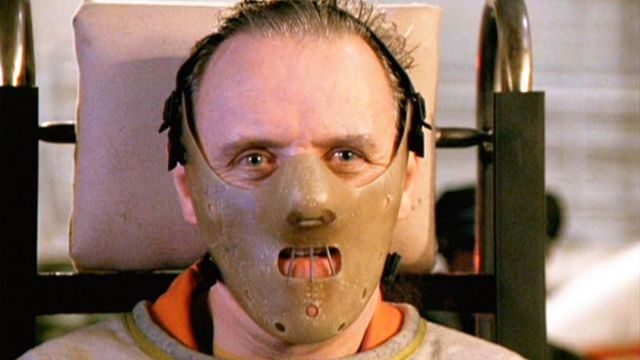
It’s a thought that I’ve been slowly coming around to for a while, and then the already tiresome, nauseating EU referendum intensified with tribal, polarised ‘debates’, a batshit crazy, cynical and malicious Orwellian photo-op and an American style political assassination.

Then there’s what happened after the vote. I mean where do you start? Well, I’m not even gonna bother with it. It’s inexplicable. A load of fucking nonsense.

I long assumed interest and engagement in this referendum would be minimal. Clearly I’m someone who’s ‘out of touch’, or has been made naïve by sticking firmly to my milieu of the few, where the most politicised a conversation tends to become is moaning about how shite your wages are or how your employer conducts business, or to pass comment on [insert your least favourite political figure here] ‘there that cunt on the telly again, they need to fuck off, right now’.

So I had a strain of the irreproachable arrogance Rolf Harris or Jimmy Saville utilised around young women and teenage girls in the seventies and eighties, or more relevantly many of the Remainers are now showing post Brexit. I believed that my perception of public mood and opinion was broadly accurate (and right) and mirrored my own feelings about the EU referendum. Surely the dogged cynicism that had positioned immigration as its core issue, when combined with a widespread lack of interest in the EU constitution (it’s understandable that people would have neither the time nor inclination to research this in depth), would turn many people off from engaging and voting? Now, in the aftermath, and having seen the actual effects of that combination and how many on both sides have reacted to it, I’m far more certain that many, too many of us, have indeed gone completely and utterly insane. It’s either that or we’re in complete denial about how we’re behaving. Pick one.

Central to this malaise is political engagement, or, to be more specific, the many forms of mass political engagement that now exist. Most aren’t healthy or helpful, or to be more succinct, assume a truly democratic spirit.

There’s a fundamental mis-understanding many now exhibit during political discourse, or just willingly ignore altogether – to change someone else’s mind you first have to attempt to understand why someone thinks differently from you, or, at the very least, consider what may have caused it, and figure out a way to explain the cause or causes to them without being a patronising cunt. That takes skill and a level of trust, and those aren’t earned easily. During this referendum there was precious little self-awareness displayed on social media or by the corporate media commentariat. It was a lousy succession of self-serving preachy opinion pieces, tweets and forum posts, many of them pointlessly seeking the validation of the like-minded. All they did was tell us what they thought of the other side, why they were right (see me, I can predict the future so I can) in a passive aggressive manner, or, worst of all, telling you what was best for you and how to think. This was accompanied by hostile barbs aimed at the contrarian viewpoint if anyone dared to offer it.

This is a new form of moral hedonism and intellectual dishonesty that sees petty point scoring, grandstanding, and pious absolutism masquerading as campaigning. It’s become so widespread that people are no longer inclined to listen unless the content ensures confirmation bias(es). If you went on the internet to state how you voted, or were intending to vote, and why, unless you’re doing this among your congregation (or on a blog nobody reads), you’re likely onto a loser. State you’re voting remain to Brexiters and you’d be branded a traitor who has been cowed by the establishment, or a subservient gimp who ‘liked being ruled from Brussels’. If a Remainer posted a graph showing you the economic benefits of EU membership it would often be followed by a snide dig that voting Leave meant you were blithely protesting against the Westminster establishment, or that you were just a xenophobe who believed in the cod historical romanticism of ‘how things used to be’, or worst of all beguiled by Nigel Farage’s highly divisive rhetoric.

I’ve know folks who voted Leave and whose vote wasn’t based upon a phantom immigration crisis now or in the future as depicted by a media agenda or a flimsy existential notion of what their true identity should look and feel like. Even though I disagree with their choice, I try to imagine being in their shoes, or even better someone who was leaning towards voting Leave during the past week, who went on the net to do some research. Consider not its content but its tone; would you be inclined to listen to it? Who, with any semblance of self-respect, would?

In defeat the losing side now tends to lash out. Some of the vocal Remain voters and commentators (some even call themselves ‘truthers’) have become even more insufferable and incandescent behind their keyboards. I resorted to this sanctimonious self-serving bollocks after the Scottish referendum when the No result came down, or after I got sacked recently, but what good did it do? I felt better for about five minutes after attacking those who’d wronged me, but that’s about it. Nothing changed, and it didn’t change anybody’s mind, because I made no attempt to.

None of this applies to those who actually canvass and speak to people, face to face, in a measured manner. They listen to their responses, then state their case while addressing the specific and personal concerns of the voter. It’s the only face of genuine democracy that remains. Speaking to someone in person, we tend to, in most cases, be civilised, where the detachment of other forms of communication can easily encourage us not to be. Sadly door to door canvasing and one to one engagement in person is hugely time consuming. Plus, why do this when you can sit on your arse, do a few posts on Facebook, fire off a series of tweets, or go trolling on a forum instead? A party/campaign will canvass as part of its efforts to reach voters, but in this climate there’s more scope, or reach if you prefer, in sending out leaflets full of lies or scaremongering in bold type face, or have the politicians and talking heads sticking to a script and appealing to existing biases they’ve fomented through years of repeating clichéd slogans.

So, I wonder if those who are so derided as politically apathetic, the dreaded non-voters or unthinking voters, aren’t the sensible ones in ignoring it all, and if not sensible then possibly far more content with life. They’re enjoying life, doing what they want, not worrying about what the consequences of the referendum result or an election will be ten years from now. Meanwhile the likes of me are trying and failing to blog about ‘what it all means, man’, many of the liberal minded are helping to build resentment by spending endless hours perusing their digital symposium of choice to bleat on about how thick, deluded and or racist the other lot are for not agreeing with them; while on the opposite end of the spectrum others seethe that their lot isn’t enough, blaming this on immigration rates, ‘them foreigners’ stealing ‘our’ jobs, housing and benefits cheats and perpetually thinking of ways to punish the causers of this social and cultural decay.

Blame, in a nutshell, was what the EU referendum, and its aftermath, became about. I could spend another thousand words trying to analyse how we got here, but I think I’ll work on my book instead.

Posted in Politics | Tagged , , , , , , , , , , , | Leave a comment