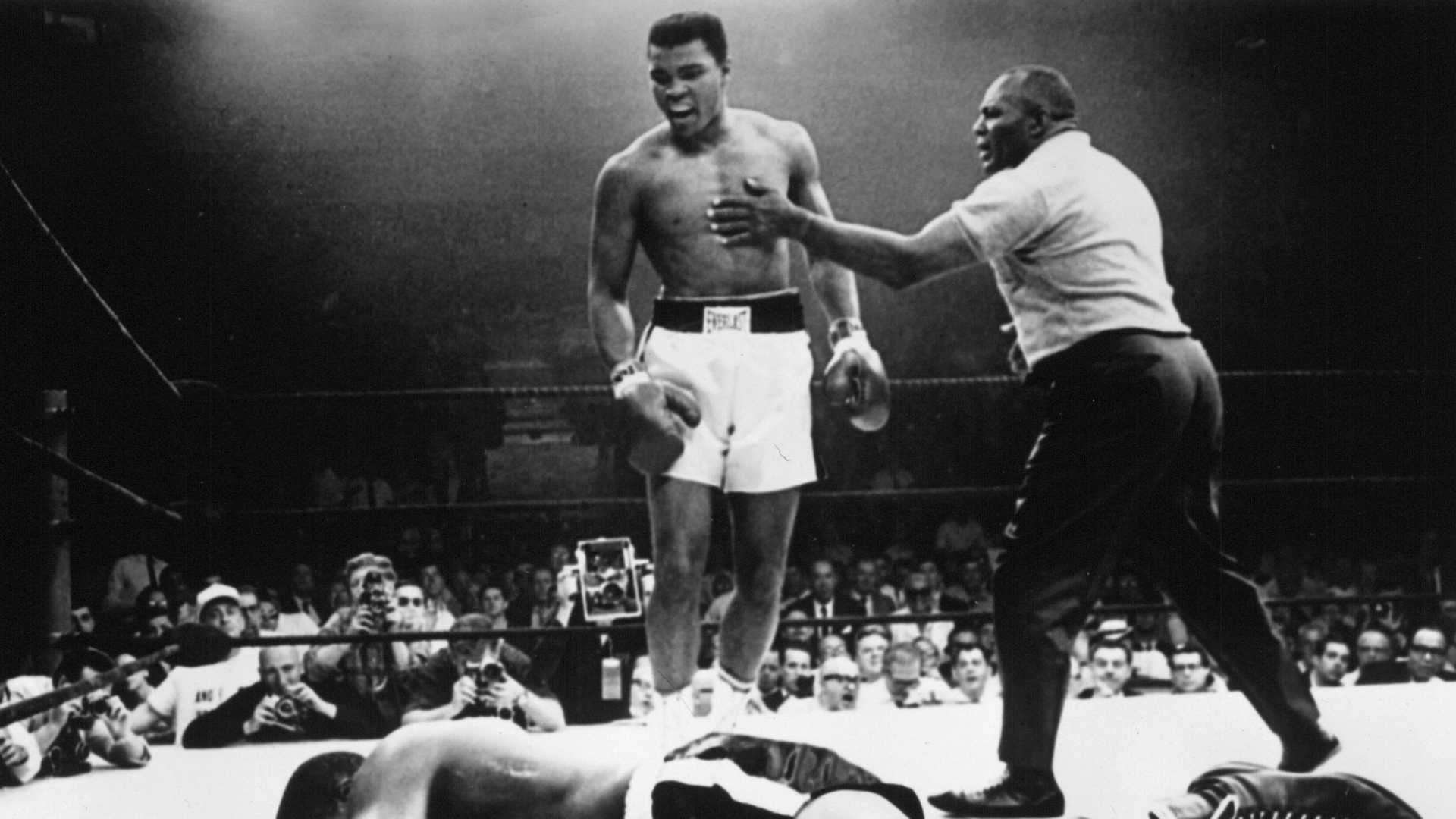
People die every day; if you’re jammy you get old before this happens. That makes Muhammad Ali one of the fortunate.
There’s been enough gushing opinion on the internet about him, so I won’t add to it, nor personalise it in a vomit inducing sycophantic manner, or attempt some conclusive take on what he meant ‘to the culture’. I accept that by writing about this it can easily be construed as such, but trust me, that isn’t my intention here.
I’ve always been fascinated that ‘The Greatest’ tag stuck so firmly, and that it became far more potent and transformative than any alias. Others have been described as or described themselves as such before and since in other sporting and artistic spheres but with Ali it became his fixed metonym. He said it, and with enough belief that enough believed it as true. The proof? When you said it, ‘The Greatest’, everyone knew who you were referring to. It didn’t matter how old you were, where you were from, or, like me, you weren’t that interested in boxing, its implied meaning and understanding had the ability to unite on a basic, universal level.
Because I’m not versed in the sport’s knowledge I’m not going to be absolute, but I strongly suspect that Ali is viewed as he is not solely for his ability as a boxer, though unquestionably considerable, but mainly for his personality, showmanship and resolve. In his youth he was a captivating, provocative and exotic blend of confidence, charisma, dogged self-belief, eloquence and sheer contradiction, but most of all principle, that was totally ill at ease with the racial stereotypes and cultural context in which it existed.
Not even the brazen, lamentable and predictable commodification and deification of him in later life for commercial greed (be it terrible fictionalised documentary movies, or grasping cunts looking to make money through just being associated to him), nor his aborted late career bouts (which proved that, like us, he was susceptible to hubris and pride) change the perception. Nor did the striking sight of his mortality in lieu of his reputation and legend – visibly frail, and cowed by Parkinson’s disease lighting the Olympic torch in Atlanta in 96, or egregiously, unforgivably and distastefully (as his attendance was cynically driven by the twat that is Seb Coe) his token cameo at the legacy-less London games four years ago.
But let’s not be too negative about the cynicism of others as Ali wasn’t as a figure or person, because wait a minute, there are Youtube videos which shows us his personality in abundance. Plus the selectivity of the medium affords folk the opportunity to consume him in any bespoke way they choose. Sadly, I’ve watched some truly cringeworthy ones where he’s obsessively fawned over, to the point that it becomes very weird and uncomfortable, but I suspect many will elide them, instead immersing themselves in the more restrained yet still unblemished portraits of the legend, like this moment, which is pretty neat. Undoubtedly this process will permanently solidify his reputation now that we have the opportunity to immortalise the mortal.
The one above is my favourite so far. It’s Muhammad Ali with two other great boxers who were his most formidable rivals – George Foreman and Joe Frazier. The other two are just normal blokes, albeit strong, tall and good at ducking, weaving and swinging their arms with accuracy and force, just talking about their careers as they would with anyone anywhere. Ali, albeit already visibly diminished by too much punishment, on the other hand, is in his element, and still demands all of your focus. It was yet another stage where he got to be himself. Here he manages to be gregarious even whilst being relatively quiet and understated, and comedic by employing the Karl Pilkington deadpan routine to deliver uncharacteristic modesty.
It begs the question, did his talent make him this way, or was being himself the innate gift that elevated him in his chosen profession? I know which way I lean, but it doesn’t matter. The root of his cultural iconification is really our introspective intrigue. I think most folk wished they were like him or could just experience what it’s like to be truly admired for being sui generis, so watching someone like him receive the praise and adulation is the closest they’ll ever get. But whatever, as a spectacle watching ‘The Greatest’ being great at what made him great is totally justified.
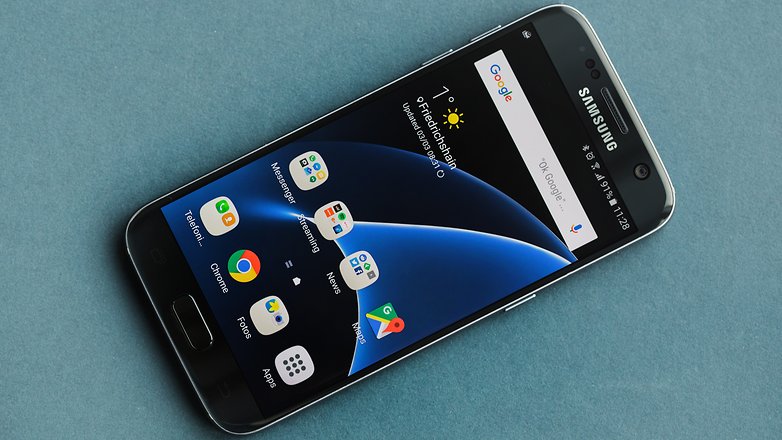
The Samsung S7 is a smartphone. More smart than it is phone, but by heck is it smart. Intuitive is the word. In fact, I’m living, breathing, walking, shitting evidence that it’s completely idiot proof, it’s a terrific bit of kit.
No news there then, but shortly after purchasing it I watched on it, appropriately, a video of a recent lecture Will Self gave at Brunel University. In said lecture Self focuses on ‘by directional digital media’ and how it’s fast replacing (or, depending on your point of view, eroding) the literary codex that dominated the nineteenth and twentieth centuries. Self also discusses that the omnipresence of handsets has placed the environments traditionally required to conjure successful literary fiction (being able to sit down without distractions, solitude, basically) in jeopardy. He observes that increased digitisation has fomented a reactionary dogma among the Gutenburg minds that populate many educational institutions, in an attempt to preserve the reading of novels as is. As Self puts it – ‘the novel has been placed in a care home, albeit a nice one, where it’s being well looked after’, largely out of sentiment, not practicality.
This brings us to Marshall McLuhan, whose prophases Self references in his lecture. You may not agree wholly with McLuhan’s aphorism ‘the medium is the message’ but nobody could deny that his theorem of the ‘Global Village’ has come to pass, and not only that, it presupposes and informs the many ways in which we communicate in the twenty-first century. We can now recognise the term ‘unified electrical field’ as a loose euphemism for the internet. But consider when McLuhan wrote “Understanding Media” – 1959 – and suddenly it becomes a seriously impressive bit of foresight.
Using the Samsung S7 to watch this lecture drives home the intellectual benefits of technological advancement. But it also made me wonder whether I or any of us can ever consider our attitudes towards technology in a vacuum? Do those of us (like myself – born in the early eighties) who came along just as the ‘dead tree culture’ was starting to be threatened by a raft of technological advances in digital communication and entertainment alternatives, have quasi Gutenburg minds? And if so how does it affect our views of digital advancements?
I’m sceptical that anyone truly has a Gutenburg mind anymore, as a species we’re too pragmatic, and as such we’re too busy constantly adapting to rapid innovation because we know it will help us. As Self puts it, those with Gutenburg minds ‘expect to stay within a text and for it to be self-explanatory’. It’s generalising, but we’re primarily hedonists who’ll do what we want, and technology emboldens that streak. So, when most folk, even the younger digitally reared generations, decide they’re going to read something, they will. For example, I always read when I’m on the toilet, it’s habitual, like the associated act; so does it matter if it’s a book, an article on my phone, or perusing a forum? Nope. I’m still willingly sequestering my focus and time to read, it’s just a question of what. You’d have to be an insufferable tosser, dogmatic, and pious at that, to say, ‘well, it’s technically not reading if it’s multi-tasking or it’s not a paperback novel’. If anything, I believe having every conceivable choice of text, and the opportunity to read wherever we are, will encourage more of it, and maybe this will weed out even more forms of rank mediocrity we currently have, particularly in written media. If a text or an article can’t hold your interest in this age of abundance (or any form of entertainment for that matter), just how good is it? Take this blog, nobody reads it, so point made.
Plus, the rapid technological advancements of the last twenty years have radically altered our perspective of what’s possible, what’s conceivable, and we’re all working, or better yet starting over, with these new reference points. First it was the internet, then access to it wherever you are. This dissolving of the importance of paper bound news media has removed another difference between generations, the initial reference points from which we could view all technological progress. We tend to revert to a form of anecdotal nostalgia of possessions from bygone eras, usually our youth. Here I lionised the Sega MK 1655 which I used on the Sega Megadrive, but only because it gave me an advantage over my mates at the time. The joypads we have available now are far more sophisticated, and responsive. Bottom line, given the choice, nobody sane willingly reverts to inferior technology, but, in complete hypocrisy, we’ll romanticise about it and fawn over it, in some pointless abstract attempt to engender sentimentality due to its inferiority with the contemporary standard. However, books are an exception. They’re a static technology. Their form has barely evolved in over two hundred years. But, just like newspapers, once they’re rendered obsolete by a more practical method of delivery, they’ll stop being printed. Remember, we’re pragmatic, so nostalgia is reserved entirely for reverence, not physical reality.
Look, it isn’t my bag, at all. But I decided to christen the Samsung S7 with a gratuitously ghastly monged up tae fuck massive fuck off face selfie, so there you go. And yes, that is me. Fucking hell eh?
For a long time I believed there was a definitive, albeit slightly crude, criteria to judge our attitude towards technological advances. I’ve observed people falling into one of two distinct camps – those who immediately see the beneficial aspects of the latest technological advances, even if they’re in their infancy, without scepticism, and those who are generally sceptical of the next innovation’s ability to make things more convenient or improve upon the technology currently in circulation.
My suspicion used to be those who have grown up during the advent of games consoles, mobile phones and then saw the arrival of the internet as young adults, or those who have only known a world where these things exist, seemed to be less aware of, or, if you prefer, unafraid of, how quickly technology is advancing, than, say, someone who remembers the days of a black and white television that only had two channels. Not only that, they were more pragmatic and less likely to be adverse to further change because they’d had to go through less of it.
But that’s patronising bollocks. The speed and scale of innovation renders age and our experiences of technology as irrelevant. Fearing the consequences of being left behind, either professionally or socially, cows us into following along with the advances in televisions, phones, or computers, as incrementally as our budgets will allow. The result of this is, in practical terms, to blunt our perception of the speed of change. If you bought and owned a Samsung S4, then going from that to an S7 doesn’t seem revolutionary, or perhaps necessary, just an improvement on what you already knew.
Here’s what we know – the smartphone, or handset, has monopolised our lives and is rapidly modifying popular culture and how it’s consumed. So, what’s next? In the short term, and I don’t think we should get too Chicken Little over the thought of it, smartphones are going to drastically alter the mediums of television and, eventually, the internet. The popularity of the desktop computer will wane too.
Much as they are now, there will still be high end enthusiast gaming desktops, but even now these are still a relatively niche market. Having a static desktop PC just to browse the internet or for doing your accounts on an Excel spreadsheet is beyond daft, and so sales of them and laptops will decrease rapidly. Broadcasting corporations are another matter, just as newspapers started to feel impinged upon by television, then the internet, the TV corporations will fight a losing battle for too long. By-directional digital media devices will prevail, significantly altering the likes of BBC, ITV, Channel 4 and Sky and their equivalents in other countries for our, the customer’s, benefit. Their regimented dictatorial scheduling will be eviscerated, with the YouTube model becoming the standard – an unscheduled on-demand free for all. In fact, the BBC has already started the migration, albeit only using BBC Three (which shows wall to wall shite) as their experimental on-demand lab rat.
Currently your phone, contacts, television shows, music, internet, essentially your taste, can be bound in the confines of one handheld device. Eventually everyone’s identity will be digitised; your passport, birth certificate, driver’s licence, bus-pass and fingerprints will be on it and accessible via a series of taps. As an aside – my only criticism of the Samsung S7 is that its fingerprint recognition sensor that unlocks your phone is very fickle, or perhaps I just have shit fingers?
At home you’ll just plug your life, sorry your computer, into a fuck off screen or monitor. Some people probably already do. Or you’ll turn the Bluetooth on to use a wireless keyboard if you’re a writer, some probably already do that too, or top of the line speakers to listen to music, there’s no question this happens. Smartphones are only going to get more powerful with bigger capacities from now on, and soon more of us will be doing with less technology than we previously needed.
Here’s what I mean about projecting technological advancements decades in advance – could I have envisioned of a device like the Samsung S7 twenty years ago? A multi-media device that can take high resolution photos, stream live football matches in HD, has apps for virtually everything I’d want (Just Eat, Netflix, Just Eat, Soundcloud, and Just Eat again), can carry and play music, audio books, surf the net remotely, that I can read articles on, or watch thought provoking lectures? Or, essential for a writer like me, a device that carries Microsoft Word pre-installed, which allows to me write, or to note down observations, thoughts and ideas wherever I am? Just as impressively, what about a 200GB micro SD that’s half the size of a first class stamp? No, it was unfathomable to me back then, but that just makes me the same as most other folk – married to and focused on the contemporary, by necessity, in an attempt to retain some sanity in a hectic, rapidly changing, world.
There’s no question Will Self is right – we’re at the whim of technological modernity, and as the novel form and the novelist were once the ones to set cultural trends and spread progressive ideas through literature, now the technological visionaries and inventors will do the same through advancements in aiding the delivery of digital media. If the Samsung S7 is anything to go by, the future is in good hands.
The Great British summer. Bluebottles swarm around massive dog shits festering on roasting concrete. Warmer air elevates the potency of body odours, petrol fumes, dog piss and the remnants of discarded beverages. Glass shards from bottles line the gutters. Dogs get to lick discarded ice cream cones instead of their own balls. The sound of a hundred Seagulls on the prowl for half-eaten junk food. Drinks just out of the chill cabinet. Windows are down, exposing the true extent of bad tastes in music. Ice cream vans finally appear from hibernation with their cheap twee jingles. Middle aged married men are occasionally freed to do DIY in their sheds. The low pitched hum of air-conditioning systems in a thousand miserable offices. The sight of pristine bowling greens. Overhearing agonising conversations about holidays being planned. The various verbosities of carefree cunt kids on their summer holidays. That satisfyingly sulphurous stench of meat being incinerated on barbeques. Fat bastards showing too much skin and the proud parading of tan lines and sun burnt skin. Rain, and the incessant moaning about it, as if it is somehow unexpected. The drone of a distant lawnmower. Wimbledon. Glastonbury, and the insufferably earnest BBC coverage telling us how great it is. All of this will soon be upon us.
Bi-annually there’s an addition to these tropes that embellishes and for some defines the season as truly memorable – England’s involvement in a major football tournament.
Why is it so enjoyable to watch England fail at football? Even if it’s exceedingly annoying, it isn’t just the highly disingenuous, wearisome, and fickle media hype that becomes suffocating during the tournament. It can’t be that I’m Scottish and a fan of the Scottish football team, people in other countries like seeing England fail too. Am I being overtly parochial because it’s England, a supposed ‘hated’ rival? I can’t say yes, many other things English are quite likable, and I’m simply not that bothered by how England perform in other sports, whether it’s cricket or rugby, or if they beat Scotland in some sporting context.
My specific issue, as I suspect it is for others, is that supporting the English football team now requires necessary adherence to a specific nationalistic dogma. This malaise, a collective primeval lobotomy, whereby a style of snide 1850’s jingoism becomes the vogue, the kind that sees chainmail being worn, “Ten German Bombers” sung and the theme tune from “The Great Escape” played on a loop by some attention seeking cunt with a trumpet, is an extreme strain of how people behave when it’s taps-aff weather (going topless to everyone else unfamiliar with the dialect). Rare occurrences tend to liberate us, offering a release from normalcy of routines, and when it’s part of a collective or consensus this encourages an indulgence in its associated behavioural traits, as these are seen as a more acceptable substitute for latent, often personal, grievances.
But it’s a bittersweet experience for these Little England fans that intertwine their self-worth and the preservation of their cultural identity into supporting the England football team. It should be a release, but it’s not, as their recent performance in the sport fully embodies the terminal decline of several sacrosanct cultural facets. The chart success of the song ‘Football’s Coming Home’ before the 1998 World Cup, for a second fucking time, was telling. Its self-congratulatory prose harkened back to past glories (an analogy for a crumbling empire) with the accompanying vomit-inducing hubris that this could be revived. That it succeeded over and above its comedic and self-deprecating rival ‘Vindaloo’ (which emphasised admirable traits of modern British culture – inclusivity and humour) is a microcosm of the myopic, craven, covert bigotry that perpetually lingers in the average unthinking, indoctrinated psyche and that freely ascends during England’s involvement in a major tournament, and what’s more it’s encouraged under the guise of ‘supporting’.
Though often blamed, expectations of success aren’t driven by the media alone; they’re too cynical for that. However, their cynicism is responsible for imbuing what already lurks beneath. As Euro 2016 is hosted in France, who’s looking forward to their inevitable headlines or television montages that reference Agincourt, Waterloo, or the two World Wars won on French soil against those ‘Gerry bastards’ (when in truth the Americans bailed us out on both occasions)?
All of this shite feeds into a sense of cultural superiority imbued by historical precedent, a specific part of which is believing that football, real football, is English, that it’s unique, and that the game is defective or rigged or just played plain wrong (all of these can be considered as euphemisms for sophisticated) if England fail. With every failure to ‘bring it home’, and re-establish the game’s authenticity, the irritable self-loathing xenophobia that motivates the next opportunity to be a ‘St. George’s flag twat’, parade around in a special (in so many ways) plastic England hat given away by The Sun, or sing songs quoting historical achievements and victories, becomes more sinister. Instead of taking pride in having successfully transposed the game to all four corners of the globe, a lasting legacy where in all but a few countries it is now the sport, England fans seethe resentfully that several of these countries have gotten better at it and have been more successful than they have, ‘at our game’. This is exacerbated by the acknowledgement that, deep down, it was caused by the hedonism of their forefathers, to take a part of home wherever they went. This still happens of course, tens of thousands go to Spain on their summer holidays, only to then spend half their time languishing in British themed pubs.
Supporting England with this aggressive vigour is one of the last conduits where a mass show of nationalist pride can be excused as the euphoric prospect of England winning at something, just one more time. At its worst, most base form, defeat, or the delicious, crushing agony of a penalty shootout loss, confirms that the culture is past its peak. They can’t accept that they’re just another saggy bum in the prison shower, the hubris of Englishness, and its inherent superiority, a given right, won’t allow it.
You’re seeing a vulgar variant of it now being transposed to and wielded during the EU referendum to support an Out vote, and we saw it used during the Scottish referendum on independence too. Some tried to beg the Scots not to leave, a desperate action that managed to humiliate everyone. It was a feint accent of the same traditional expectation; that they owned us, that we belonged to them, because that’s the way things are, and always have been. They used to own quite a few more places, but they’ve gone their own way now, and England used to be decent at football too, they even won the World Cup once.
Another element that makes supporters of the England football team so loathsome is the irrationality of their obtuse overconfidence. For players it can be excused, as some is necessary to succeed, but in a supporting context its constitution induces winces and cringes. We see this bipolar behaviour among supporters of all football clubs – they spend most of their time obsessively and mercilessly picking apart the flaws of their teams and the players who play for their club, only for it to be willingly forgotten and replaced by unwavering faith once the game is due to commence.
An extreme example of this myopia is reserved for Wayne Rooney. There has been a concerted effort throughout the years by journalists, talking heads and certain fans with a profile that all feed from or benefit from the immense wealth involved with the coverage of English football, to perceive Rooney as better than he’s actually been. He was once introduced at an awards ceremony as ‘special’ (though he was right, as Rooney certainly is in other ways) and often since as ‘World Class’, whatever that means.
In a way the continuation of this complex is understandable. It was once bestowed on Kevin Keegan, Bryan ‘Tampax’ Robson, Paul Gascoigne, Gary Lineker, then the ‘Golden Generation’ – Gerrard, Scholes, Shearer, Lampard, Fowler and yeah, Beckham, while all good players, never quite emulated the greatest players of their era, particularly at international level. It’s easier to blame them for failing England than perhaps embracing the truth that English football is defective, hidebound, shackled to its own idea of identity, and the hype that’s invested in maintaining this is detrimental to a needed philosophical reformation. The consequences of the notion that football mad England has to produce elite talent, and ‘always does’, is being felt now. They have a weak clueless manager, a new, largely untested side, and Rooney has nowhere left to hide. Not that he could; fat and content, with a laughably inflated sense of self (from years of underserved, obsequious praise), and certainly neither fit or on form, he’ll be given central billing by yes man Hodgson, based on his litany of goals in pointless friendlies and his perpetual failure to live-up to his cod reputation at major tournaments.
Who could forget Rooney’s dismal performance against Italy during the first game of the World Cup in Brazil? Most English fans and his media supporters, that’s who. Straight after the game the excuse that he needed to play through the middle ‘to be effective’ was wheeled out. How this affected the rest of the team and its chances of succeeding became an irrelevance, or, even worse, it was presented as a cure all solution for the team’s tactical and intellectual inferiority. Hodgson, being the weakling he is, acquiesced to the pressure or perhaps he just agreed with it? Rooney scored, England were pathetic and lost the second game to Uruguay and went out, but at least Rooney’s status as the crown jewel, the potential saviour at the next tournament, was maintained.
Still, continuing with this delusion is the safe choice for everyone, and good for us who enjoy seeing England fail. Another Rooney shite-fest will absolve those guilty by association for it, as it posits Rooney and Hodgson as scapegoats for this underachievement. The process can then be repeated, reserved for the next saviour – probably Dele Alli, because there must be one. This process is a gift for the FA, a hypocritically pious organisation happy to deflect and obscure its archaic and covert modes of operating from modernity, inclusivity and accountability.
Speaking of mediocrity – Roy Hodgson, the master of it, is still in situ. How marvellous. He’s exacerbating England’s dismal record of failure at major tournaments, in Brazil he couldn’t even get them to the Quarter-Finals to be thrashed or lose on penalties, but at least he’s English. Indeed, Hodgson is likely to revert to safety as England produced their most negative football in living memory at Euro 2012, where they went out on penalties to an average Italy side. A more attacking philosophy was adopted in Brazil two years later where they finished bottom of a piss weak group. There was poetic justice too, as the great Luis Suarez, much reviled by the English media and many fans, because the mercurialness of his brilliance is the antithesis of the modern English inferiority complex, became England’s executioner.
Even better, this time expectations are genuinely heightened, they had a perfect qualifying campaign, winning ten out of ten games against an assortment of second and third rate dross. Anything but reaching the semi-finals, which England have failed to do since Italia ’90, will be viewed as failure this time. It’s as if the last two tournaments didn’t happen. But it’s a ‘new team’, which brings its own narrative – new hope. The Golden Generation has gone, to be replaced by a bunch who are either a combination of brainless (Jordan Henderson, Danny Rose and Kyle Walker), grossly overhyped (Dele Alli and John Stones), past their peak (Wayne Rooney and Gary Cahill) and injury prone (Jack Wilshire and Daniel Sturridge). But really, let’s be thankful they’ve fallen for their delusional trap again, do we want the English tubthumpers to revert to a mode of introspection that encourages self-criticism, truth and reconciliation? To accept that the star above the crest was an aberration? Of course not.
Look, I accept it’s both extremely warped to derive joy from seeing such anguish, and that International football, now the poor relation to club football, is viewed as this important. Perhaps Scottish football fans, who accept our mediocrity and tragicomic failures as inevitable with humour and grace, would be like England fans if we invaded a bunch of countries in the name of and won a World Cup? Maybe, and I always look to be fair and inclusive where possible. So let me be empathic – this specific cycle of delusion surrounding the England national team and how it affects its subjects and observers is an entirely healthy means of projecting and confining historical and future prejudices on to a medium that has diminished consequences. In fact, this phenomenon is the one true thing we can all believe in, some of us just believe in its formulaic process more than others, some of us think it’s richly deserved, and some of us even enjoy it. May it never change. Here’s to another summer of schadenfreude, because I just can’t get enough.





You must be logged in to post a comment.