After last season’s thrills, spills and ultimate belly ache there were high expectations heading into the new season.
But Liverpool’s season has been a disheartening, disjointed, limp mess. With six league games left their chances of finishing in the top four look remote and they were eliminated from both European competitions embarrassingly early by mediocre opposition. There’s still the FA Cup left to play for, but at this stage of the season there was supposed to be more on the line than that.
And so the inquest has begun. This dismal recidivism has become an integral feature of most Liverpool seasons during the last twenty years.
Regardless of whether these pre-season expectations of title contention were fair or realistic it would be prudent to first document why Liverpool is in this position. It all started with the departure of Luis Suarez to Barcelona. The club hierarchy could be criticised for agreeing to a binding release fee clause in his new contract, but even so, it only applied to foreign clubs and it ensured Liverpool received the third highest transfer fee in history. The main lesson to be gleaned from this is that even in a culture, and a sub-culture, obsessed with money, certain things are more valuable than it, and any team is likely to decline if you remove thirty-two goals from it. Only now do we fully appreciate that the influence Suarez’s manic esoteric style of play had was difficult to quantify before his departure, and confirmed as nearly impossible to replace after his sale. He encouraged fear and chaos in the minds of opposition defenders and simultaneously galvanised his teammates. Regardless of how you feel about Suarez, it would be foolish to deny that last season’s performances put him elite company, behind only Lionel Messi and Cristiano Ronaldo, clearly the world’s two best players.
Even with Suarez’s departure Liverpool had the resources and the players to build a competitive team. But things certainly haven’t gone to plan. Some of these wounds have been self-inflicted, others not. Nobody could account for Daniel Sturridge getting repeatedly injured throughout the season. Now the striker partnership that produced over fifty goals between it last season had been decimated. This was further compounded by several of the new signings, particularly the strikers, failing to integrate immediately and or performing poorly largely due to being ill-suited to the tactical and philosophical requirements of manager Brendan Rodgers. Daniel Agger was replaced by Dejan Lovren, who has been and is a catastrophe. Adam Lallana, Liverpool’s most expensive summer signing, appeared in all of Southampton’s league games last season, but has missed chunks of his debut Liverpool campaign due to injury. Steven Gerrard seems to have aged in dog years in six months. Jordan Henderson has come to believe that an effective midfield performance means continuously playing at a speed akin to a Golden Retriever chasing after a tennis ball, and that being made vice-captain, with the implied knowledge he’ll be made captain next season, means trying to replace Steven Gerrard by mimicking him. Sadly Henderson clearly lacks the skill, intelligence and inspirational qualities to carry it off and so Liverpool are left with an impoverished affectation of Gerrard instead of a player playing to his strengths.
Given all this, it was unsurprising that the early season performances and results were dismal. With the team struggling to score goals the pressure built and affected the confidence and form of many players. While Rodgers, even if it came too late, resorted to adaptation to help restore the confidence required to pull Liverpool back into the top six, it isn’t a long term solution or evolutionary step, and so Liverpool are essentially where they were six months into Rodgers’ tenure – a team with potential still to be realised.
While Rodgers has already proven he can develop a team from that position into contention, you can understand why Liverpool fans would be frustrated with him, the players and the ownership for finding themselves back where they started. After the debacle of the Hicks and Gillett tenure, which saw the club lose Rafael Benitez, Xabi Alonso and Champions League football all within the space of a year, followed by another period of instability (this time on the field only) after FSG salvaged the club from the brink, there was finally something to be positive about. If not ultimately the best, they had the most exciting team in the league, and it was young too. They’d waited five years ‘to be back’, only to take several steps back in a matter of months.
But that recent history and what’s happened at Liverpool over the last eight months should be instructive of how difficult it is to succeed, never mind dominate in today’s Premier League, and how quickly things can change in football. Constructing a competitive team is fraught with difficulties and takes time, and frustratingly the declines of successful teams are often precipitous.
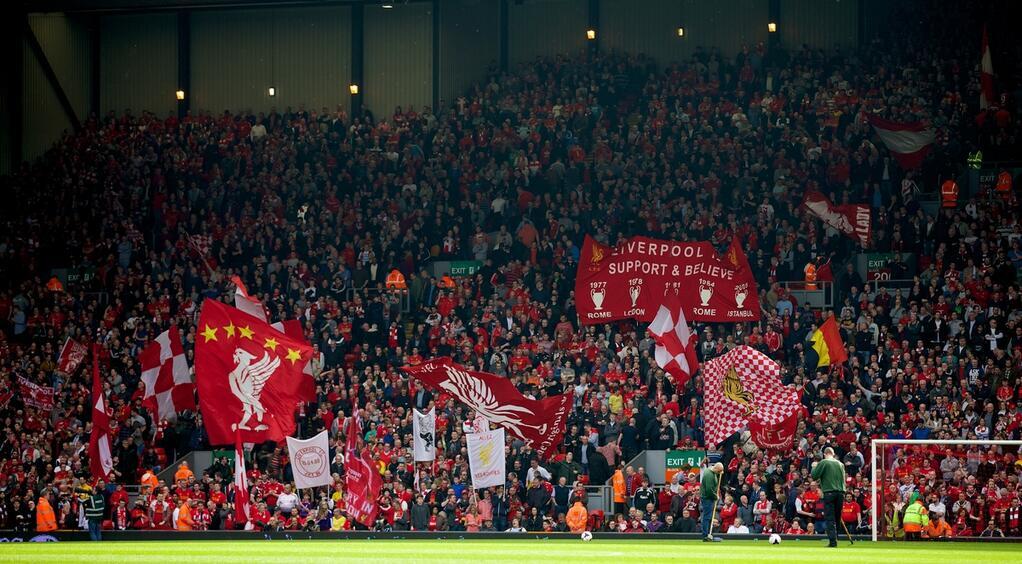
Invariably the agony of perpetual disappointment or perceived stagnation leads to increased revisionism and convenient selectivity. This happens among fans of all clubs, but it afflicts Liverpool’s fanbase differently, too many have become enamoured by a romanticised nostalgia and a mythologizing of the club’s historical achievements, foolishly applying them to analysing contemporary concerns and often doing so just to find fault.
Liverpool’s success throughout the seventies and eighties is, in the modern context, an aberration and an irrelevance. There were no oligarch owners. There were no additional millions in revenue for selling hundreds of thousands, even millions, of replica kits, or kitsch tat emblazoned with the club logo in China, India, the US, Thailand, Japan and Malaysia. There was no gargantuan Sky TV deal that saw salaries and transfer fees mushroom. Andy Gray was still playing football, badly it must be said, and Richard Keys, with no Haytch Dee to contend with, wasn’t required to shave his forearms like a good misogynist should. Without the Champions League monopoly there was no incentive for any club to be satisfied with anything less than first place and there wasn’t any discernable advantage between finishing fourth or fifth in the league, which is now perceived as so critical to a club’s chances of succeeding the following season. There was less movement of players between countries due to the limits on foreign players. Having a tactically astute manager and a club’s ability to scout and develop mostly British players counted more than its bank balance.
So when someone with an average income is faced with ticket prices rising well above inflation and the utterly shameless and institutional greed in today’s game, rejecting it in disgust, and pining for those halcyon, simpler times, is an understandable reaction. However, if you’re happy for your club to reject it too, you must accept the consequences, one of those being that the club is unlikely to compete for league and European titles.
The problem for Liverpool is that past successes have fomented contemporary standards and expectations. Liverpool FC ‘exists to win trophies’, so to maintain this tradition the fans must accept a woeful paradox: that the club will have to adopt the many ugly facets of modern football’s culture to succeed. But even in that concession a pious sense of entitlement reveals itself. They want success and the wealth that’s required to achieve it, but only a specific kind, the kind that’s earned. Ask most Liverpool fans and they’ll say they certainly don’t want to be owned by a “sugar daddy”, because in the eyes of most reliance on an oligarch’s philanthropy has devalued the achievements of Chelsea and Manchester City.
So it seems odd that Liverpool are now being impatiently chided by many of these fans for trying to methodically bridge the financial gap to the oligarch owned clubs and Manchester United with the only feasible route that can appease them. One that will maintain their place on the moral high ground and gives them what they claim to want – a model which is reliant on an old fashioned way of succeeding; living within your financial means, expanding the ground’s capacity and being better at scouting and developing players than your rivals, the ‘Liverpool Way’ even.
With the club working in such a small margin of error and starting from an acknowledged disadvantage not of their own doing, Liverpool’s season should be seen as a setback not an irredeemable failure. Not so. Now someone must be held accountable and something or a number of things must change.
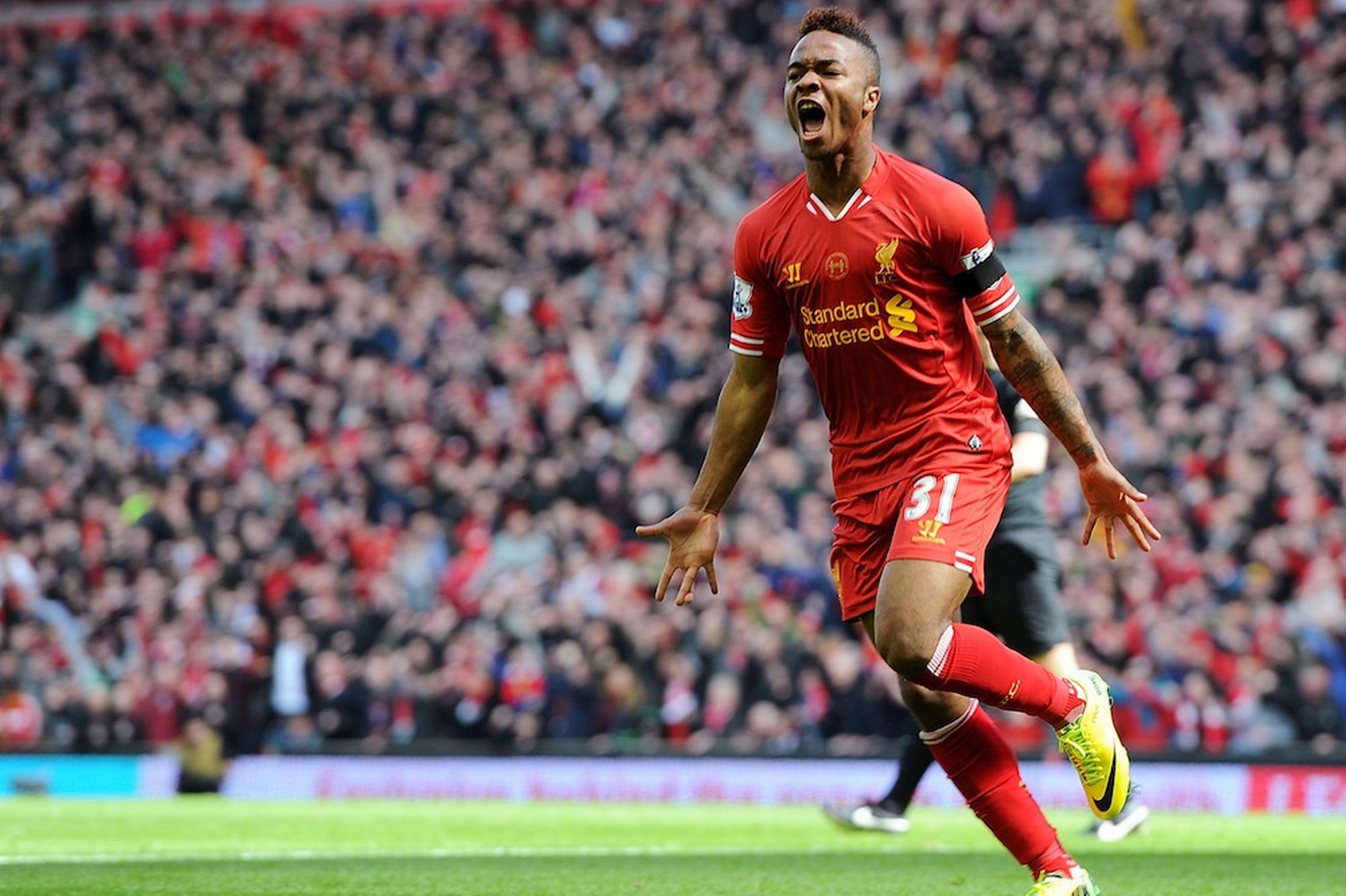
It was an interesting coincidence that just as the inquest started and blame was being apportioned, after Liverpool’s defeats to Manchester United and Arsenal all but extinguished Liverpool’s chances of meeting the minimum requirement – Champions League qualification – Raheem Sterling was being derided for his ‘excessive’ contract demands.
Sterling’s desire to be paid his market value and play in a side that’s contending aligns with many Liverpool fans wishes, yet when he publicly asks for a contract befitting the status he’s achieved as one of Liverpool’s better players, he was roundly characterised as being greedy. Tellingly Sterling predictably and lazily got linked with moves away to many of Liverpool’s competitors and financial superiors. The hypothetical manifestations these reports allowed many Liverpool fans to indulge in were illuminating, as it was instructive of the contradictory standards which fans are judging the club by. Many immediately quoted the prices they’d happily sell Sterling for, yet used Liverpool’s refusal to capitulate to his demands as evidence of the club’s lack of ambition for not paying the necessary wages to keep its best players.
This poses a number of questions. Should Liverpool, or any club for that matter, not negotiate with its players to get the best deal it can, so that it can use resources to improve elsewhere? Isn’t it possible Liverpool will be trying to do this with Sterling and every player? Should the club pay to keep its best players, which will make it more likely to contend, or not bother? And regardless of a player’s perceived value, or whether you agree with his market valuation, where does continuously selling your best players get you? After all, Luis Suarez’s departure really drove Liverpool on, didn’t it?
These questions are redundant anyway, as Liverpool currently have the fifth highest wage bill in the Premier League, not the fifteenth, so they can afford to pay wages at the high end of the scale, and in certain cases do so already.
But here I must concede the point, following a football club always includes such instances of myopia, partisanship, passion, even a certain amount of self-loathing and suffering, and it would be far less interesting without these experiences. The most uninteresting mediums, whether sporting, political or artistic are always the ones that provoke no reaction whatsoever. Blandness is the worst crime of all.
However, in general, Liverpool fans seem to be in a permanent existential midlife crisis, and it’s completely fucking bland and craven. They know what they want, but they don’t know how to get it. Or they do know, but that way isn’t ideal so they adopt destructively short term attitudes to players, the manager or how the club operates. Some just have no clue at all. So round and round in circles they go, searching for something that isn’t there. There’s always a simple reason for failure, and or a simple solution those working for the club cannot see.
Suitably there’s an ever evolving cast list of villains to choose from, and in that process the club’s staff is compartmentalised to elide several truths; acknowledging the reality of the club’s current status, that nearly every relevant employee at the club is responsible for its performance and a latent dissatisfaction at a sanctimonious fan culture that’s seeks to inhibit outbursts of unfettered aspiration.
So, depending on your purview it’s the owners, it’s their philosophy, their inability and or refusal to pay wages or transfer fees that other richer clubs can, but remember, most fans don’t want a sugar daddy or an oligarch’s charity.
Most often it’s the manager fault, the softest of targets. The justified worship of Bill Shankly has been bastardised into a destructive legacy, with modern Liverpool managers being assigned a disproportionate amount of importance relative to their modern function. Not that this has altered the stock arguments, those remain the same; he’s naïve, too inexperienced, a megalomaniac, he’s Roy Hodgson (fair enough on that one), too hard headed, too defensive, too attack minded, does he understand English football? He failed at his previous job, or his teams play shite football, or, as it is now, that a better manager would mitigate the tactical deficiencies the team plays with and in doing so eradicate the financial disadvantages the club has to overcome.
But there’s more good news, a new concern has emerged – usually after a failed signing, because those never happen at other clubs – focusing on the transfer committee, or that Liverpool has a transfer committee at all. Very little is known about said transfer committee, or how it functions, but when faced with a fifth placed finish that doesn’t matter.
Failing that, it’s the players that aren’t good enough (but this is related to the owners, wage structure, manager and transfer committee, isn’t it?), including those valued at £50m, or you wince at the pointless lamentation that a player at another club is better than one currently in Liverpool’s team, like Suarez is now.
It’s hard to believe that Liverpool managed to challenge for, and nearly win the league with this defective philosophy, inferior wage structure, manager and players. Equally alarming is that last season, and how narrow the margin of defeat was, has been forgotten so quickly. Or perhaps it was just luck and or it was the inadequacies of others that allowed Liverpool to go so close? If you constantly shift the goal posts, and frame the club’s situation and approach with pessimism in times of failure, nothing can ever work.
But let’s be reasonable and recognise that the alternative is too grim to accept; life isn’t fair, things are different now, no club can remain the best, that Liverpool is no longer it, and if they do succeed chances are any success probably won’t be sustained as it was during some bygone utopia. But things could be worse. Liverpool has the resources to contend, unlike a lot of other clubs. But just like the psyche of your average Liverpool fan, looking at things as they really are isn’t that simple, unless it works, and the club succeeds, then it’s the ‘Liverpool Way’.
With the General Election only a month away, expect a failing fourth estate that’s entirely reliant on sustaining the British electorate’s loyalty to Westminster’s conventions and structures, to throw copious amounts of shit at her and the SNP.
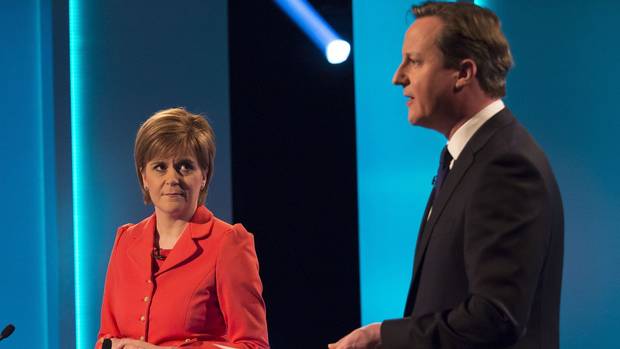
The recent UK leader’s debate went as many expected, in that it was only mildly unwatchable.
Nicola Sturgeon certainly sounded coherent as her message has been consistent. Also performing well was Natalie Bennett. Mind you, she’s a member of the Green party, who are so nice they’re impossible to dislike, and better yet she was placed next to Nick Clegg, so she couldn’t fail. Once you had gotten over how braw the Welsh woman’s accent was and how Welsh she was, most of what she said seemed very sensible, and she earned bonus points for having immaculately coiffed hair.
Unsurprisingly the blokes were all totally fucking shite. Ed Miliband assumed the transfixed Alex DeLarge stare of terror, like he was watching a puppy being castrated with a hatchet. Disco Call-Me-Dave Cameron did the opposite. He avoided eye contact with everyone and everything, reminding you of a used car salesman who suddenly becomes evasive when customers ask too many questions about reliability. Nick Clegg, surrounded by his more relevant ideologues and superior public speakers, managed to wear an expression that vacillated between suicidal and condemned (pun intended), and last and by every measure least Nigel Farage, who, appropriately, has a mouth like a pair of arse cheeks compressed together. Inappropriately and disdainfully he used it to fire out a stinking heavy turd, plopping HIV stigmatisation into the already festering toilet bowl that is the ‘debate’ on immigration. Not even trying too hard and subsequently failing to be ‘a lad’ could polish that one.
The reaction to Sturgeon’s performance on Twitter was as expected too; those who dislike the SNP looked to discredit what she said, those who plan to vote SNP and or support Scottish independence lauded her performance, and many of those who cannot vote SNP wished they could vote for her and her party, or a UK wide equivalent.
This last point is critical as the SNP offer a centre left curriculum of no austerity, increased public spending, to protect the NHS from free market vultures, nationalisation of rail transport, free university education and an end to the grossly expensive and obsolete trident missile system. The SNP aren’t popular in Scotland just for wanting independence – let’s not forget 55% of Scots voted No – most folk tend to be attracted to the policies of free health care, education, a growing economy (a euphemism for jobs, essentially), a reduction of wasting public money and their votes equalling more of a say over their own future.
Sadly the English don’t have a recognised party that stands for many of these things. They could vote for Labour’s promise to ‘deliver social justice’ which is a euphemism for a slightly diluted version of the draconian Tory austerity plan, or they could vote for the Green kind of austerity which isn’t branded as such, or they might consider voting for the Lib Dems, but then they’ll start pissing themselves laughing. Oh, sorry, I nearly forgot, they could vote for UKIP’s cocktail of watered down fascism mixed with unfettered Thatcherism and obnoxious xenophobia, but you have to be a total cunt to do that, and thankfully most folk aren’t drunk 24/7.
That leaves quite a number of people in England without affiliation, or to put it another way – a political party that aligns with many of their political beliefs. To paraphrase the writer and documentarian Terence Davies ‘fossil monarchies justify their existences solely through tradition’, so we should expect other traditional centres of power and wealth to attempt to do the same by taking advantage of the electorate’s willingness to compromise on their beliefs when voting. That brings us to the media, and the role they’ve played in creating this vacuum in the centre left of UK politics, and the role they’ll play in deciding the upcoming election result.
One of their vested interests, well, their main one actually, is maintaining their status and therefore their access to money. As Thatcherism is essentially a form of grotesque opportunism, it suits politicians and the mainstream media to agree to push minor variations of a set economic and political narrative, say austerity for example, that benefits them and those that can continue to enable them. Once established other policies can be introduced, preferably surreptitiously, that further exploit the populace to benefit the lobbyists, politicians and the media corporations.
Many print journalists rightly recognise that, as corporate lackeys, their relevance (and jobs) is tied to ensuring the electorate adhere to the traditional Unionist voting conventions that uphold this monopoly. For the mainstream media that requires pushing the narrative that for your vote to truly count you must vote for the Tories or Labour, and painting a vote placed outside the middle right section of the electoral spectrum as ‘a waste’. There are exceptions however, in the case of UKIP it’s indulged with a vulgar fascination of what the UK would be like for the elite if a party even further right of Thatcherism was in power.
But the SNP now pose a threat to this misconception of necessary voter compromise. Those in power know that if the SNP succeed in May, and force Labour towards the centre left on certain issues in a confidence and supply arrangement, then the illusion of choice and how Westminster and its co-dependents have disingenuously wielded it to their advantage will start to come under serious scrutiny. Questions will continue to be asked throughout the UK as to whether the idea of maintaining a Union of four countries under the umbrella of a centralised government is desirable, viable, or democratic, “Broken Britain”, anyone? Most worryingly for the Unionists that will likely involve those in England asking how and why Nationalist parties, who only stand candidates in one of the UK’s four countries, have come to be the only ones that offer a manifesto of predominantly centre left policies.
Irrespective of this the panic among journalists and national media outlets is understandable. Circulation of all the national broadsheets and red tops is rapidly declining and better yet they’ve taken a precipitous dip, particularly in the last five years. What does this mean? To survive, they need to maintain revenue streams through advertising, and with each passing day more of their revenue is generated through online hits, rather than copy sales.
The internet is where most people choose to consume the news, as it allows them to do so entirely on their terms, and the way news is spread and disseminated has unalterably changed since the introduction of social media. Papers have been forced to fight on a terrain, or rather a platform, in which they’re no longer guaranteed to be the first or well sourced. The net’s also awash with independent political blogs (okay, mine doesn’t count, as nobody reads it), and some of these blogs focus on media incompetence, inaccuracies and unravelling their fabrications.
So, under threat from all sides, desperate times call for desperate lies.
Smears are nothing new. The Hillsborough disaster was used to smear Liverpool fans as hooligans, partly you suspect as the city of Liverpool vehemently opposed Thatcher’s managed decline. Most papers printed the ghastly accusations but retracted the story the following day, except The Sun newspaper, then ran by uber cunt and Nigel Farage antecedent Kelvin McKenzie, who stood by ‘The Truth’ story. It’s taken twenty-five years of campaigning by the victim’s families, and two government enquires for the original allegations to be completely disproven, and even then, there are still those who believe the original headline. Years later The Sun newspaper, again, opted for the headline ‘Bonkers Bruno’, after former boxer Frank Bruno was sectioned. Unlike ‘The Truth’ The Sun quickly retracted the headline, but like ‘The Truth’ the damage had been done, they’d stigmatised mental health problems in the minds of many of their impressionable readers.
A more relevant and contemporary example was the Daily Mail’s attack on Ed Miliband’s dad, which was very similar in style and substance (or lack of) to the one inflicted upon Nicola Sturgeon. It was claimed Ralph Miliband was a commie who ‘hated Britain’, and why not? Despite being in opposition to a deeply unpopular coalition government, Labour still can’t get a projected majority or anything more than a marginal lead in the polls this close to an election. The Westminster conglomerate, now under duress, is only as strong as its opposition is electable. The Labour party leadership has sold out, relinquishing any ethical and progressive advantages the party once stood for, purely for self-interest. That makes it easier for the right wing media to run a campaign in an effort to secure a Tory majority, which would lock the SNP out of directly dictating policy. That’ll ensure the status-quo, in the short term at least. And failing that, in the likely event that neither Labour nor the Tories win enough seats to form a majority, in the constitutional vacuum that occurs post-election, the idea of the Labour party working with the SNP to form a working government will have been thoroughly demonised as an undemocratic concession that’s a ‘threat to (Thatcherite) Britain’, a process which is outlined in more detail here.
Ed Miliband was rightly outraged when his father’s name was besmirched, and unable to ratify the claim, a retraction was printed. Yet, in the ultimate hypocrisy, Miliband was all too happy to use the Telegraph’s smear on Sturgeon when it suited his political interests. When the chips are really down, and the Westminster oligarchy is to be protected, birds of a feather will, you know, shit on you from a great height.
The incessant media scrum and its interference with the investigation into the Soham murders, phone hacking, rife in many papers, including that of a murder victim that perverted an active police investigation, and the recent HSBC scandal, are highlights that confirm integrity and thoroughness are no longer necessary requirements at the pinnacle of professional journalism.
I’ve never liked Peter Oborne’s politics, but he deserves immense credit for taking a hard line in quitting the Telegraph, and then publicly exposing the dishonest machinations that caused the philosophical changes to its editorial direction. It confirmed what we all suspected, that faced with their new reality of diminished importance, a national newspaper chose to suppress the HSBC story to placate and protect the image of its ‘business partners’ who would’ve been implicated, rather than maintain its journalistic duty to faithfully report its findings to its readership and the public.
Up here in Scotland we know the score, the game is up, and the circulations of the Scottish Nationals have plummeted after the mudslinging used by the Unionist supporting papers to discredit the case for independence. The case for Independence had its strengths and its flaws, but very little attention was paid to analysing them, and for good reason.
Corporate media organisations still have one last advantage in their favour – all stories from the mainstream media are instantly reported by other news outlets, and in between the time the claims within them are refuted or proven, the initial report can still be presented as possibly true. The skill in executing a successful smear is evading the release of evidence when challenged, keeping the artifice of the original fabrication intact for as long as possible. Simon Johnson of the Daily Telegraph had a story he wanted to share, and decided to follow this formula, so, how did it go?
The initial article was light on detail, or source material, and contravenes what the headline implicitly states, but that doesn’t make for a good SNP trashing headline, does it? ‘Nicola Sturgeon may or may have said something along the lines of’ wouldn’t be a convincing or memorable headline. You also have to question the immaculately coincidental timing of the article. The meeting between Nicola Sturgeon and the French ambassador took place in February, yet the story was only released into the public domain the day after Nicola Sturgeon did well in a national televised debate which saw the popularity of her and her party rise.
Sturgeon denied the quotes attributed to her publicly, and through Twitter no less, and why not? It allows her to respond directly to her accuser:
.@simon_telegraph your story is categorically, 100%, untrue…which I'd have told you if you'd asked me at any point today
So, at this point, we ask, who’s telling the truth? Putting aside any political preferences, given the Telegraphs past form and current reputation you’d say Sturgeon, but it’s not certain. Is it? The evidence still hadn’t been presented.
And because it hadn’t, the mainstream media outlets, knowing it’s come from one of their own, could run the headline without checking. It lays the foundations for articles like this to be written and it provided an opportunity for members of the Westminster conglomerate to pile on:
It's déjà vu – SNP not being straight. If Scotland votes SNP, Nicola Sturgeon will get her wish of another Tory govt.http://t.co/s2g93XuyNo
When the French consol-general and the French ambassador confirm Nicola Sturgeon’s version of events, it no longer seems to matter. The initial story is out there, and in the news cycle, what’s reported first tends to resonate. It’s not until James Cook of the BBC and a few others actually ask for direct quotes, and denials, that the focus shifts from what Sturgeon may have said, to why this memo was leaked, who leaked it, and whether it even exists at all:
Spokesman for the French ambassador tells me @NicolaSturgeon did not express a preference for next British prime minister or government.
Instead of offering a retraction, Simon Johnson adds the relevant excerpts of the memo to his article. This breeds new life into the fiction, with the pretence of revelation. The content is banal and the author of it even doubts the accuracy of what Sturgeon is alleged to have said. Those entrenched in their dislike for the SNP, and the threat they represent, continue to believe it, as it still isn’t definitive proof of anything. It’s basically still one person’s word, or interpretation, against the word of those who deny it.
So, just to recap, we had a journalist running a headline smear based on a document which is nothing more than an indirect highly speculative fourth hand account. Before publishing Johnson didn’t bother to ask those in attendance to corroborate whether it may or may not be true, perhaps he could’ve gotten conflicting reports had he done so and strengthened the story? Perhaps all the denials would’ve forced him to re-think its veracity? Yet the Telegraph ploughed ahead and published the piece and several follow up opinion pieces presuming its content to be factual despite no concrete evidence to suggest that it was. It screams of an orchestrated effort to create news to suit the paper’s overarching agenda, that being maintaining the political landscape of union, which likely benefits the Telegraph’s financial backers and possibly some of its dwindling core readership.
Even better was to come. It turns out the leak came from the Scottish Office, which is unsurprising given the idiot in charge, and here he is whining like a little bitch because he’s getting his arse kicked by one Nicola Sturgeon in a one-on-one debate…mmmmm…the plot thickens:
Nicola Sturgeon asked for an enquiry, which was immediately granted – hardly the actions of someone who’s guilty – and called for the original article to be updated, with hers and the French denials included. Here we have a politician telling a newspaper how it should operate:
.@Telegraph don't you think you should update this story with the statements from both myself and the French Ambassador that it's untrue?
And people wonder why newspapers are dying? It’s for this very reason. They’re lying and or at best not corroborating stories. In this case the story was refuted within hours by all those involved and in Nicola Sturgeon’s case through Twitter, and many of the platform’s users also instantaneously asked for evidence of the claim. Think about that, this couldn’t have happened even ten years ago. When strong evidence wasn’t forthcoming, well, you could understand the mass scepticism and cynicism of the Telegraph’s motives. And when the source evidence was presented very few were impressed with it.
While those in the grip of ideology will believe what suits them, most of us like honesty and fair play, and we don’t like to be made to feel like mugs. Due to their contemptuous behaviour and the increasing desperation that drives it, most no longer have any confidence in print journalism or journalists.
Thankfully social media gives people a level playing field to refute and challenge claims in real time, and to figure out which sources of news are trustworthy and which aren’t. It castrates an essential ingredient of the smear journalism and lazy journalism of the past, the inability to contest a story. Even so, getting your message out first, true or otherwise, is still better than nothing. And with a month still to go, expect to see more of it.
Compounding matters is that, whatever you believe, this story has very little value. Anyone with even a passing interest in politics could conceive that in the event Labour aren’t willing to do any deal with the SNP, either in a coalition or by confidence and supply, being in opposition to a Tory government, likely another centre right coalition, could be good for the SNP’s long term aim of gaining independence. The Tories are only marginally more popular in Scotland than Adolf Hitler is in Jerusalem, or Nick Griffin is anywhere.
Thing is, there are better ways of the SNP achieving independence. Blunting Tory austerity with devolved powers from Holyrood will still hurt Scotland more than a Westminster pact with Labour would. Finding a positive to a Tory win a month from now would be making the best out of a bad situation, anyone who believes it to be the party’s preference is a loon or a fantasist like Alan Cochrane.
It’s funny, it seems like eons ago, but the Union was saved last September. After their defeat in the referendum, instead of moping, the SNP moved on to the next target, meanwhile the No campaign’s Unionist conglomerate continue to be panicked. Why? It’s not just about Scottish independence any more. The motivation for change wasn’t defeated, it was emboldened and it’s spreading, and the main Unionist medium for attacking that movement is fast becoming obsolete and has moved into a realm where its message will be perpetually challenged. More people are politically engaged and they now have the tools to be properly informed, and there’s nothing that can change that.
And when people look, they see that the lying, lazy and unethical journalism that pervades the commercial media offers nothing to the democratic process or the reasoned debate that should surround it. And as a result these ‘institutions’ are dying a slow and deservedly painful death. So the question is – what now? Well, I’ll leave you with this piece of emphatic advice from Captain Kirk:



You must be logged in to post a comment.