Song Of The Day – Everybody Knows by Leonard Cohen

Posted in Song Of The Day | Tagged , , , , , , , , | Leave a comment

Why I’m voting Yes.

YES SCOTLAND

I’ve been writing steadily for about seven years now. Not for one second do I think I’m good, or even average at it. It can be hard to offer an honest, objective appraisal of one’s own work, and really, being good at it isn’t the point, not for me anyway. When you enjoy doing something, particularly a thing that requires creating something from scratch, it becomes an edifying process.

Repeating the process over and over again when writing, whether over the short form (articles, short stories, poems), or the long form (writing a novel, which is still ongoing, not that you were asking) now holds no fear. I always come up with something, or I believe that I can, whether it’s an idea, an angle, a sentence, a character, a character trait or a plot. There’s always an event, or a reaction to said event to comment on. There’s always another article to write after I’ve finished the last.

So I’ve framed this referendum on Scottish independence through my experience of the processes of writing. It’s probably why I’ve been predisposed to voting Yes from the start. The basic procedures of developing a story or crafting a paragraph are similar to those required in building a country’s constitution. Both will be based on ideas, a dialogue of many voices (I’m not schizophrenic, at least I think not), there’ll be some trial and error involved, there will be mistakes, you will learn from them, and ultimately you’ll weigh up the options and a series of decisions, informed decisions, will be made and things will proceed from there.

Of course it would be nice if it turns out I’m a good writer and that Scotland, the people of Scotland, and the government we elect in Holyrood are all capable of running an independent country that is ‘successful’, ‘fair’ and ‘serves our needs’.

I can recognise that the main argument against independence involves the uncertainty in the aftermath of a Yes vote. The Yes campaign is portrayed by its sceptics as idealistic, its plans underdeveloped and its proposals based on speculation. It’s a country that doesn’t have control over retaining its own GDP, or its budget, so of course its proposals are mostly speculative, as they are whenever any government proposes a new policy or a piece of legislation. This aversion to going from known circumstances, even if they are unsatisfactory, to the unknown, reminds of a scene from an episode in Mad Men. Don Draper finds out that Lane Price has been embezzling money from Sterling-Cooper. Don goes directly to Lane and tells him that he needs concoct a legitimate reason for his resignation, so Don can bury the evidence. Lane looks shell-shocked, when he realises what that means – starting over. Don, who permanently lives a lie of stolen identity, that’s required periodical reinvention to stay one step ahead, is used to starting over. He tells Lane that the worst is over, and that the contemplation of what lies ahead is often harder than the reality.

Here Lane Price and Don Draper are allegories of Yes and No voters in this referendum. Lane is fearful of change because he envisages the outcome of change being worse than what he currently has. While Don represents the Yes voters and Scotland’s capability to manage changing circumstances imposed by factors outwith its control, in this case Westminster’s austerity. Don’s fearlessness at the prospect of doing something new, as it has improved his station in life, mirrors the growing attitude of those moving to a Yes vote. Why can’t we, we shouldn’t we?

Which leads me onto the one argument against independence that I find most troubling, but, nonetheless, is pushing many people to Yes: it’s the belief held by some that we’re not good enough to be an independent country. Anyone with a modicum of sense knows that this assertion is fallacious. However, given its complete ineptitude, the tone and rhetoric of the awful Better Together campaign has become entirely beholden to, and as such reliant on, inculcating such a notion to succeed. How sad.

As a Scot it’s hard not to be insulted by the disingenuous strategy of Better Together’s campaign. It has somehow managed to misrepresent the psychology of the Scottish electorate; the motivations of Yes and No voters, and most egregiously of all it has piously attempted to present the intentions of its public leadership as synonymous with the intended altruism of its patronising slogan.

Take the evidence of this last week alone; we’ve been treated to Gordon Brown’s hypocritical attack on the ‘fanatical nationalism’ of the SNP (how many fucking times does it need to be pointed out that the Yes campaign isn’t the SNP?); the phantom new devo max offer/lie Gordy fronted only for William Hague to deny at PMQ’s that such an offer had been extended, and that ‘it wasn’t government policy’ to do so; Nigel Farage’s odd speech in Glasgow, an event that quickly and thankfully became an irrelevance due to complete disinterest; the ‘selfless’ jingoistic and xenophobic Orange Order marching through Edinburgh for Queen and country; another march, of Labour MP’s ‘our imperial masters’ through Glasgow city centre, at the taxpayers expense, just to see Ed Miliband, Labour leader, give a condescending speech at the top of Buchanan Street asking you to vote No and maintain a rancid LibCon coalition government nobody voted for; Ed Miliband’s equally condescending and risible border patrolling gaffe; we saw pitiful scaremongering attempts by BP, Asda, John Lewis, TSB and even RBS, that the prices of their products might rise in an independent Scotland, that businesses may move and jobs would be under threat (which the CEO of RBS refuted), all of them allegedly encouraged to do so by Number Ten and the Treasury, where there’s little doubt they have significant lobbying privileges; Nick Robinson of the impartial and thorough BBC shamelessly misreporting that Alex Salmond didn’t respond to his question, when he did, and then some; yet more currency union misnomers that need refuting daily; George Galloway making seven thousand plus teenagers, Ruth Davidson, and everyone watching at home, recoil (no, not for wearing that hat) for citing the defeat of the Nazis as a reason to vote No; and last but by no means least David Cameron bunkered away safely in Edinburgh speaking to an equally safe audience of sympathetic at best, apathetic at worst, financial workers.

It’s a shame these figures from Westminster, and the upper echelons of business and finance, have attempted to lower the tenor of democratic debate to the mudslinging levels we’ve become sadly accustomed to seeing in London. Worse yet it is wholly unrepresentative of a nuanced position held by a number of No voters. When devolved from my own viewpoint I can understand them wanting to eschew risk. The known may be unsatisfactory, but it is known. Policies are only proposals. Financial markets can shift unexpectedly. In the global market place jobs and operations often move. There are no certainties in the outcome of this referendum, whether it is a Yes or No vote, and that is a central truth.

Like me, many people will assess the landscape of this vote on terms that suit them and their intellectual and ideological station. I think now the difference is many, and I think the majority, especially after the last week’s events, even if they’re inclined towards retaining the Union based upon an emotional attachment, are now analysing the question again.

And if they’re looking, they’ll not fail to see the craven methodology of Better Together’s campaign strategy, particularly the contributions from the Labour party, as unforgivable, regardless of the referendum’s outcome. They’ve made Scotland look bad. They see its lies and smears about the Yes campaign, thinking you’ll fall for them, instead of adopting an analytical strategy that focused on the questions the Yes campaign cannot or will not answer. They will be cognisant that the Westminster hegemony continues to hang its hat on a trickle down economic model, based on the brazen myth of wealth creators. There’s the favouring of aspiration and privatisation, that hasn’t decreased the debt (still rising) and has furnished those at the bottom with foodbanks, zero hour contracts (if you’re lucky) and the other ghastly end results of welfare austerity. George Monbiot had it right, if you were part of an independent country, especially one that contributes more revenue per head than it receives from the UK treasury, would you choose to join a country with this political ideology that favours elitism and a highly insular concentration of wealth?

Unless you clearly benefit from any of these policies, and few do, all of it is bound to have an influence as people tend to cast their vote on the following criteria: their interpretation of the facts, being guided by self-interest (personal circumstances), altruism, pride, or a combination of all. And that cuts both ways. Look at the lowest common denominator and you’ll find Yes voters whose primary motivation is a desire to stick it to the English and their establishment, just as you’ll find, on the other side of the same coin, the hardline Unionists who also exhibit the self-loathing complex of inferiority. The only difference here is that their resentment at their supposed enslavement by imperialism is misplaced. To paraphrase Alan Bennett ‘they are in the grip of ideology, and ideology tends to drive out thought’.

Thankfully they will be in the minority this time, as this referendum has done something amazing: cured what seemed to be an apathy towards politics that was fast becoming terminally ingrained in British culture. The causes of this apathy are apparent and widely agreed upon.

And that’s my core reason for voting Yes – having generated this level of interest and debate, the kind of environment where political discourse inevitably foments activism, ideas and creativity, I don’t want to see it squandered, and consign it as a footnote in history where idealism and pragmatism met but were denied the opportunity to consummate a lasting legacy.

There’s more riding on this than just Scottish independence too, it’s the democratic idea that everyone feels legitimised to have a say, and that their say counts.

We’ve seen grassroots campaigning from the Yes side that has embraced the many ideologies, ideas and methods of its movement. It carries within it bespoke elements that can be tailored to engage any voter. This includes minor parties, and the Yes campaign has given them the platform to permeate the debate by getting their message across. The Greens see the opportunity for a country that can be based on sustainable energy and jobs, and they appeal to those who agree. Likewise the Scottish Socialists have the chance to bring people to Yes by calling for nationalised public services, education and health. Many Labour, Lib Dem and Tory members will seek to maintain the Union, but they’re also alive to the possibility that an independent Scotland would give them to the scope to reform their parties.

Add it all together and this critical mass allows for a myriad of perspectives to converge when discussing what an independent Scottish parliament, entirely in charge of the country’s finances, would be able to achieve. There are other questions, what kind of new political parties will form in the event of a Yes vote? How will the result of this referendum force the SNP to change? Will the process of writing a constitution create new laws, new forms of tax(es)? Will the welfare state, the NHS, and education be reformed? Will local councils be allowed greater autonomy with their budgets, or not? What voting system will decide future elections in an independent Scotland? I’d argue having come this far, where we feel everything is up for debate, we should take the next step and actually go from talking about these things in the hypothetical and abstract, to embracing the challenge of actually providing answers and solutions.

My fear is a No vote vindicates the formulaic modes of politicking that exists in Westminster, which, as we’ve seen, for the past decade and two different governments has provided no answers, no solutions for the people. There’s a good chance that a Yes vote puts that established order under pressure. For Scots in particular, whether you’re voting No or Yes, to go from this climate of engagement, to becoming a smaller percentage of a larger electorate, the majority of which is disengaged due the absence of a genuine alternative, lacks appeal. Instead of motivating change, a narrow defeat for Yes could deflate the movement in Scotland, and stymie any aspirations of a political movement in other parts of the UK, who have looked at what’s happening in Scotland with an appreciative jealousy. And just how will the legions of Yes voters feel about partaking in general election next year where our votes are rendered essentially meaningless? Not too enthusiastic I’d say, like much of the UK populace, which, lest we forget, got a government it didn’t even vote for last time.

Voting Yes won’t make me feel any less British, nor will it make me feel any more Scottish. And I don’t see it as abandoning the UK. The Yes movement for most isn’t about Nationalism, but us taking responsibility to demand change, for more control, for more say. That’s the bottom line, wherever you live, it’s up to you to do the same, and not rely on others to do it for you. If there’s a demand by enough people, be it in Wales and Northern Ireland for independence, or in the counties of England for greater autonomy, referendums will be held, and then you’ll have your say.

Which brings us to the most important question, why are we doing it? Why is this referendum happening? Because we can do better than this, and deep down I think most of us know it. The disagreement, if anything, is how to achieve it. With independence we have the chance to do so from a blank slate. That frightens some people, but that enough people care about it – with ninety-seven percent of the eligible electorate in Scotland now registered to vote, turnout is likely, in the context of recent European and UK general elections, to be abnormally high, probably above eighty percent – has shown me that we can take the next step. At the very least we’re prepared to decide. I’m ready to embrace the challenges ahead that independence will bring. The only remaining question is do enough of us want to write our future? I hope so.

Posted in Politics | Tagged , , , , , , , , , , , , , , , , , , , , , , , , , , , | 2 Comments

Song Of The Day – Anima by Vessel

From the album ‘Plush, Honey’ (2014)

Posted in Song Of The Day | Tagged , , , , , , , | Leave a comment

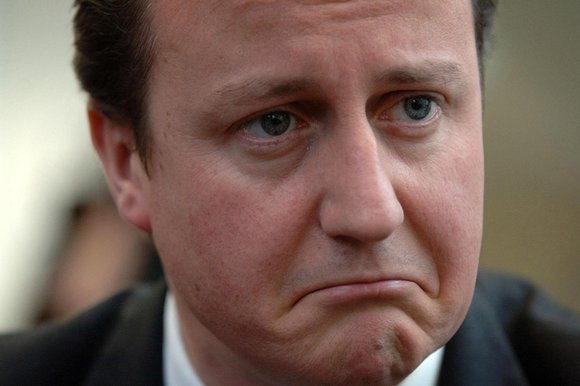
It now becomes clear. David Cameron has taken some canny advice, and is trying to sabotage the Union.

cameron sad face

When I originally wrote this piece almost a year ago, it was entirely in the glib sensibility, honest. I was trying to make light of the landscape of the referendum on Scottish independence at that time. Things were certainly different, the Yes campaign was only starting to make inroads, and even those were only seen to constitute a minor shift. The Union was still under no threat whatsoever. It looked as is if it would take more time than the Yes campaign had left to fatally puncture the pro Unionist propaganda and lies that pervaded the mainstream media. With the media desperate and complicit to serve their own meagre vested interests in toadying up to the elitist structure than consumes British wealth, they looked to inculcate the widespread apathy among the electorate that change wasn’t possible and or misinform the undecided voter, or entrench those who were starting from a default position of No.

So, it was going really well, there really was no need for Dave, sorry David, no sorry Dave Cameron, to take time from his busy schedule of warmongering, exacerbating the UK’s wealth disparity and partaking in his party’s campaign of victimising the unemployed, infirm and impoverished to traverse all the way up to one of the ‘provinces’, to put the delusional arrogant wee Leckie in his place in a live debate. So he appointed one of his centre-right neo-liberalist cronies to do it for him, a second rater for a second rate concern. In retrospect it’s become clear now that’s when the contingency plan was put in place.

Thankfully this worked better than we ever dared to hope, but now I’m left wondering for whom?

Now David, Ed, and Nick, dubbed the three (un)wise men, but I prefer The Three Stooges, are to arrive in Scotland some time over the next twenty-four hours, they’re depriving Westminster of their essential presences too, to make the case for the Union. Or so David Cameron claims. They’ll be followed by the twin pillars of diversity in Nigel Farage and the Orange Order on Friday and Saturday respectively, also looking to make the case for the Union. This follows on from Gordon ‘loser’ Brown fronting their new unconstitutional, undefined offer of more powers earlier in the week. What a line-up of failure. What a shit sandwich. Add it all together and it immediately reminded me of the plan I outlined for David Cameron months ago, that if we did reach this point, where the referendum did shift on its axis, so would the machinations and motivations behind Dave’s attempts to ‘save’ the Union. Instead of actually wanting to save the Union, he would only appear to, and in the climate in which this referendum now exists, his actions would have the seemingly unintentional effect of sabotaging it.

Take the change of campaign name away from Better Together, is it but a disingenuous manoeuvre. Think about it, now we’re to be treated to the sight of The Three Stooges from Westminster, the home of elitism and cronyism, appearing under No Thanks signs. No Thanks to what? Westminster politics? Talk about well designed.

All the evidence fits, doesn’t it? It’s been played perfectly: show them how disinterested we are, and then show an interest when the prevailing attitude among the Scottish electorate towards our attitude towards them has piqued. Charlie Brooker’s fantastic and hilarious column may have been glib, but his perpetual cynicism perfectly mirrors the vista of Westminster politicians, politics and politicking that’s now held by most of the UK populace. Their brazenly apathetic, until recently, approach to this referendum has put many onto the racket these fuckers are running and have been for some time. The Scottish issue means this potential contaminant has been concentrated into a gold fish bowl where fall guys can be elected and much more easily be shot at. Only sadly, at this time, it’s just us in Scotland who have the chance to blow them away. This plays perfectly into David Cameron’s long term goal of gaining infamy. History has proven that the populace of the rUK can be distracted into a state of amnesia by the fall of political figures. The end justifies the means if it means that ideas and policies can survive.

Now the best has to come to seal the deal. That means that the No campaign have to be in full capitulation mode. Gordon ‘look at me, I’m a failed chancellor and PM who broke his word, but yeah, trust me this time’ Brown has been wheeled out this week. He’s come seemingly out of nowhere offering the promise of more powers in the event of a No vote. Though he hasn’t said what these are, just promised a timetable. But this confusion is just the start.

His introduction has feinted attention away from what’s really happening. It’s posed many questions, firstly how badly does a campaign have to be run, before suspicions are aroused? No Thanks have placed a failed chancellor with a banking crisis on his record, and as the PM was so uninspiring that it made Disco Dave and the Tories seem more appealing, a current Labour back bencher with no authority, front and centre of an offer. It’s amazing that so many people are so immured that they can’t see what’s really happening. And better yet this was during a period of Purdah, after one out of every six voters has already voted, which essentially contravenes those votes, by allegedly offering, maybe, kinda, not sure, as none of the main three parties can agree what the offer is, some form of the Devo Max fob off that David Cameron originally rejected having on the ballot two years ago. This now looks like an ingenuous bit of foresight by Davie, doesn’t it?

Thankfully this has been seen as a derisory, contemptuous, craven, unconstitutional offer necessitated by pure desperation. They’re still trying to appeal to their belief that many of us still carry the ‘we cannae, cause they say so’ meme implanted through generations of imperialist rule. That’s the entirety of their fucking shameless shameful campaign now, and what they’ve now realised is that after a while, even the most loyal ‘defenders of the Unionist faith’ get tired of hearing how second rate Scotland and its people are compared to their benefactors down south. So why hasn’t the message changed already? Isn’t it obvious? The PM wants it to remain the same. He’s out of options, only one remains. You’ll hear more of their rhetoric laced with pure defeatism, particularly about ‘economic realities‘, though it’s not said what these are, but that they’ll ensure a ‘race to the bottom’. That’s pure campaign gold for the Yes campaign.

Credit where credit’s due, the opportunity has presented itself and Dave’s in position to seize it. Expect David Cameron to make that announcement soon, possibly on Wednesday, challenging Leckie to a debate, in a duel to the death of the Union. And why not, it can’t fail, both now have the same goal, and Alex Salmond has been preparing for this moment his whole life – the chance to seal Scotland’s independence by sticking it to the most divisive, destructive and loathed PM since Thatcher. And no, sorry Tony Blair and Tony Blair’s vanity, even though you’re a massive cunt, you’re not in this conversation.

The next ten days are going to be great theatre. And my advice to David Cameron now seems to be coming to pass. Getting rid of Scotland might be the best thing he ever does for him and his kin. He alone can save the centre-right zeitgeist of Westminster politics. All he needs to do is believe that his new path is for the greater good, and have faith that the rest of us, on both sides of the border, post independence for Scotland, will take care of the rest.

Posted in Politics | Tagged , , , , , , , , , , , , , , , , , | Leave a comment

Essential Listening: What’s Going On [Deluxe Edition] – Marvin Gaye (2001)

What's Going On (Deluxe Edition 2001) (A)

On “What’s Going On” as you approach the end of ‘Right On’ you’re already in complete agreement with Marvin’s lament at society’s incremental dystopia caused by ideological factionism, and of his will not to be cowed into pessimism. You’ve been carried this far with a buoyancy that emphatically answers, or should, the question as to why this album endures. The pitiful prevailing political centre-right zeitgeist of the here and now, its nauseating rhetoric, laced with defeatism and fear, that stokes sectarian extremism, carried forth by the economically, intellectually or morally impoverished, ensures this album’s topical resonance. More than anything, it sounds right. Soul as it should be: honest, melodic and without pretention. Structurally the composition is continuous, where one track seamlessly becomes the next. Marvin Gaye’s dialogue within each track is of the impeccable earnestness, his tone is both idealistic and forlorn, suggesting that he’s aware that his search for truth and reconciliation won’t find a solution. But he’ll ask anyway.

You’ll already know about this album, and you should already own it. If you don’t, well, that’s daft, so be smart and rectify this gross mistake and get yourself a copy. But if you want to be truly smart, then you should get the Deluxe Edition released in 2001.

The reasons for getting the Deluxe Edition of “What’s Going On” aren’t immediately clear. Remastering, the usual motivation, is of marginal benefit here. There’s a remix version of the album, but the changes are slight and therefore mostly redundant. The one exception being the remixed version of ‘Inner City Blues’, which concentrates on the symbolic heartbeat that runs throughout it, its added punch provides an added depth to the song’s fable. The real appeal of this reissue is the live concert, performed at the Kennedy Center in 1972, where Gaye performs the entirety and more of “What’s Going On” on stage for the first time. It’s the symposium where he confirms his status a truly transcendent cultural figure.

And that’s important, particularly for those of us whose consciousnesses arrived after he departed. To us, Gaye, like some long dead Hollywood icon, has attained a mystique by virtue of distance. As such his career is consumed differently. It remains sequestered, safe from the jaundiced revisionism from a modern culture that has little original commentary to offer on any retrospective. You can ensure circumvention of this process by downloading all of Gaye’s music, as you can James Dean’s films say, but even so the wider consumption and subsequent over contextualisation of these figures, that inevitably occurs these days, is somewhat lacking. Gaye had a long career, but as he and it just ended, his body of work is complete and therefore there’s little scope to deface it. We’ve seen other transcendent figures of music, survivors let’s say, who have fallen foul of their own standards and the apathy towards their talents that time can induce. The various solo projects of the Beatles after they disbanded are perpetually overshadowed by our fixation with the greatness of their group dynamic. Gaye’s lack of longevity meant no later albums, which meant no perceived decline, like the Stones suffered, allowing derisive comparisons of how great they were to how average they became. There was no triumphant comeback after a long hiatus of live performing, as Kate Bush is currently enjoying, and even that’s been subject to superficial derisions, albeit mainly by insecure middle aged male scribes clearly jealous of their own relative infirmity.

This release is also important as many bootlegs of live shows, particularly before digital recording, can be poor. Some will pretentiously argue the niche benefits of a shitty sound board. There are dickheads who believe that bad mastering provides a vista of authenticity into what it’s really like to be present at a gig in such eras. Thankfully this live show is the antidote to that nonsense, it’s as clean as a whistle and it’s the least Gaye’s performance deserves.

Gaye warms up with a ‘Sixties Medley’. All Motown classics of course, even if by then they were only a decade (at most) old. They’re amalgamated in the same manner of “What’s Going On”, floating seamlessly from one to next over thirteen minutes. ‘Heard It Through The Grapevine’ seems like a must for the audience’s sake, just so they could say they were there to see it, and it gets the loudest cheer. However it’s his rendition of ‘That’s The Way Love Is’, which he opens with, that stands out. It’s easily better than the original because it’s reinterpreted in the contemporary soul sound that characterises “What’s Going On”. The sax starts with a solemn sultriness while Gaye giggles, clearly delighted to be back in the saddle. The first verse emphasizes immediately why Gaye’s one of the great performers, there’s no difference in the stability or strength of his voice between the studio recordings and live performance. If anything singing with a live band accentuates his voice, whether by design or otherwise, I’m going with design, the volume of the brass and the piano are blunted behind a combination of Gaye’s voice, retaining its potency on the mic, and the openness of a venue. The band in the absence of Gaye’s lyrics, prove their value, as the piano solo between ‘That’s The Way Love Is’ and ‘You’ mirrors the tenor of excellence that follows.

What does follow isn’t in the original order of the album. It starts with ‘Right On’, which comes third to last on the album. The key here, and it’s something you wouldn’t realise without the live show, is that these songs make sense in any order when performed live. It makes you feel silly for having projected your own comparative inadequacies of expecting safe adherence to a chronology, particularly when the observations and thoughts that constitute the album tend not to arrive as so; and of course Gaye can make music malleable, especially his own.

Starting with ‘Right On’ in a live show makes sense as it’s one of the album’s more vibrant offerings, ‘Inner City Blues’, one of its most emotive, comes third. And it’s the best version you’ll hear of it. The nagging suspicion at the beginning, to the untrained ear, is that it sounds a half octave slower. The crowd takes the bait and starts clapping along. This is confirmed when Gaye breaks off and announces he’s ‘determined to make this a groovy tune’. He announces his intention to start again, and you’re happy about that, but what you really want is for him not to stop. At the end of ‘Inner City Blues’ the pause by Gaye before that elongated exclamation of discontent, which elevates then evaporates flawlessly into the sax, is majestic. Before the pause the anticipation from the audience is palpable, yet even when it meets their expectations they’re still left to scramble for an honest reaction to seeing this performed so meticulously in front of them. They start clapping to a beat that’s supposed to be unobtrusive on its road to extinction, and yes that means that Marvin was good to his word, he succeeded in coercing the audience into helping him make it groovier.

Here ‘Right On’ and ‘Inner City Blues’, sandwich ‘Wholy Holy’. Wholy Holy, as the title suggests, is deigned to be preached. Preached, as a word, has been, in certain cases, fairly maligned and stigmatised, but Marvin’s softly delivered gospel and audibly passionate crescendo makes the sanguine emotiveness of Christian conventions accessible and benign, even to us agnostics. Due to its position in the live show, it becomes further purified, free from the blight of human cynicism and its attempts to oppress its narrator in the songs bookend it. The message: you don’t need to be a believer to believe in this.

Everyone can believe in the message behind ‘Save The Children’. As per usual Marvin asks that question, ‘who really cares?’ A woman in the audience can clearly be heard replying ‘I do’. In a live setting the start of this song carries within it an analogous subtext for Gaye’s sense of self worth, inexorably linked to his ability for authorial self determination. It meant his professional validation as a songwriter, and his success at delivering the album’s concept, had been confirmed by the people whose opinions matter the most, in the forum where he was at his best.

By this point Marvin’s clearly relieved that it had gone so well. Now relaxed, he can admit that he isn’t satisfied with the performance. Marvin asks if the crowd wants to hear anything again. It’s a leading question, and he knows the answer before it comes, but he wants to hear them say it. They say all of it, of course they do, and his laugh is disingenuously playful in response. Thankfully, he indulges them, with reprise versions of ‘What’s Going On’ and ‘Inner City Blues’. In this day and age of copious reissues, we can indulge ourselves again and again on greatness. But when it comes to “What’s Going On” you’ll gravitate to the live set every time. And it’s obvious why – it’s the purest restoration of a genius at the peak of his powers, performing his finest album, the most irresistible of combinations.

Posted in Essential Listening | Tagged , , , , , , , , , , | Leave a comment