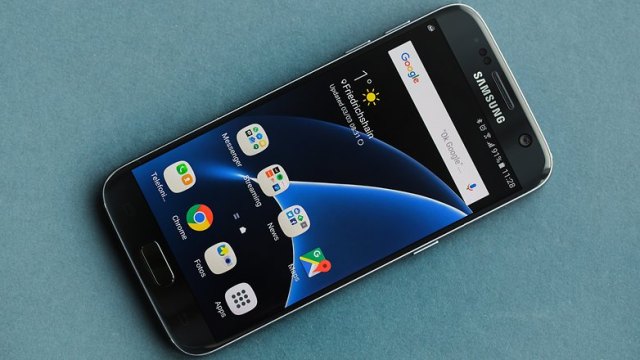
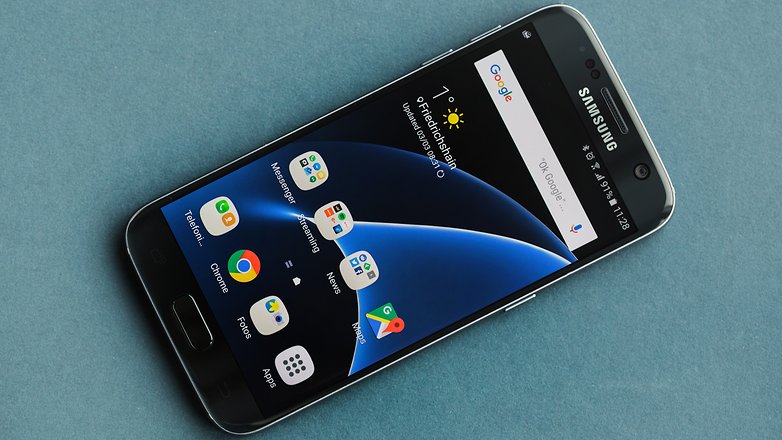
The Samsung S7 is a smartphone. More smart than it is phone, but by heck is it smart. Intuitive is the word. In fact, I’m living, breathing, walking, shitting evidence that it’s completely idiot proof, it’s a terrific bit of kit.
No news there then, but shortly after purchasing it I watched on it, appropriately, a video of a recent lecture Will Self gave at Brunel University. In said lecture Self focuses on ‘by directional digital media’ and how it’s fast replacing (or, depending on your point of view, eroding) the literary codex that dominated the nineteenth and twentieth centuries. Self also discusses that the omnipresence of handsets has placed the environments traditionally required to conjure successful literary fiction (being able to sit down without distractions, solitude, basically) in jeopardy. He observes that increased digitisation has fomented a reactionary dogma among the Gutenburg minds that populate many educational institutions, in an attempt to preserve the reading of novels as is. As Self puts it – ‘the novel has been placed in a care home, albeit a nice one, where it’s being well looked after’, largely out of sentiment, not practicality.
This brings us to Marshall McLuhan, whose prophases Self references in his lecture. You may not agree wholly with McLuhan’s aphorism ‘the medium is the message’ but nobody could deny that his theorem of the ‘Global Village’ has come to pass, and not only that, it presupposes and informs the many ways in which we communicate in the twenty-first century. We can now recognise the term ‘unified electrical field’ as a loose euphemism for the internet. But consider when McLuhan wrote “Understanding Media” – 1959 – and suddenly it becomes a seriously impressive bit of foresight.
Using the Samsung S7 to watch this lecture drives home the intellectual benefits of technological advancement. But it also made me wonder whether I or any of us can ever consider our attitudes towards technology in a vacuum? Do those of us (like myself – born in the early eighties) who came along just as the ‘dead tree culture’ was starting to be threatened by a raft of technological advances in digital communication and entertainment alternatives, have quasi Gutenburg minds? And if so how does it affect our views of digital advancements?
I’m sceptical that anyone truly has a Gutenburg mind anymore, as a species we’re too pragmatic, and as such we’re too busy constantly adapting to rapid innovation because we know it will help us. As Self puts it, those with Gutenburg minds ‘expect to stay within a text and for it to be self-explanatory’. It’s generalising, but we’re primarily hedonists who’ll do what we want, and technology emboldens that streak. So, when most folk, even the younger digitally reared generations, decide they’re going to read something, they will. For example, I always read when I’m on the toilet, it’s habitual, like the associated act; so does it matter if it’s a book, an article on my phone, or perusing a forum? Nope. I’m still willingly sequestering my focus and time to read, it’s just a question of what. You’d have to be an insufferable tosser, dogmatic, and pious at that, to say, ‘well, it’s technically not reading if it’s multi-tasking or it’s not a paperback novel’. If anything, I believe having every conceivable choice of text, and the opportunity to read wherever we are, will encourage more of it, and maybe this will weed out even more forms of rank mediocrity we currently have, particularly in written media. If a text or an article can’t hold your interest in this age of abundance (or any form of entertainment for that matter), just how good is it? Take this blog, nobody reads it, so point made.
Plus, the rapid technological advancements of the last twenty years have radically altered our perspective of what’s possible, what’s conceivable, and we’re all working, or better yet starting over, with these new reference points. First it was the internet, then access to it wherever you are. This dissolving of the importance of paper bound news media has removed another difference between generations, the initial reference points from which we could view all technological progress. We tend to revert to a form of anecdotal nostalgia of possessions from bygone eras, usually our youth. Here I lionised the Sega MK 1655 which I used on the Sega Megadrive, but only because it gave me an advantage over my mates at the time. The joypads we have available now are far more sophisticated, and responsive. Bottom line, given the choice, nobody sane willingly reverts to inferior technology, but, in complete hypocrisy, we’ll romanticise about it and fawn over it, in some pointless abstract attempt to engender sentimentality due to its inferiority with the contemporary standard. However, books are an exception. They’re a static technology. Their form has barely evolved in over two hundred years. But, just like newspapers, once they’re rendered obsolete by a more practical method of delivery, they’ll stop being printed. Remember, we’re pragmatic, so nostalgia is reserved entirely for reverence, not physical reality.

Look, it isn’t my bag, at all. But I decided to christen the Samsung S7 with a gratuitously ghastly monged up tae fuck massive fuck off face selfie, so there you go. And yes, that is me. Fucking hell eh?
For a long time I believed there was a definitive, albeit slightly crude, criteria to judge our attitude towards technological advances. I’ve observed people falling into one of two distinct camps – those who immediately see the beneficial aspects of the latest technological advances, even if they’re in their infancy, without scepticism, and those who are generally sceptical of the next innovation’s ability to make things more convenient or improve upon the technology currently in circulation.
My suspicion used to be those who have grown up during the advent of games consoles, mobile phones and then saw the arrival of the internet as young adults, or those who have only known a world where these things exist, seemed to be less aware of, or, if you prefer, unafraid of, how quickly technology is advancing, than, say, someone who remembers the days of a black and white television that only had two channels. Not only that, they were more pragmatic and less likely to be adverse to further change because they’d had to go through less of it.
But that’s patronising bollocks. The speed and scale of innovation renders age and our experiences of technology as irrelevant. Fearing the consequences of being left behind, either professionally or socially, cows us into following along with the advances in televisions, phones, or computers, as incrementally as our budgets will allow. The result of this is, in practical terms, to blunt our perception of the speed of change. If you bought and owned a Samsung S4, then going from that to an S7 doesn’t seem revolutionary, or perhaps necessary, just an improvement on what you already knew.
Here’s what we know – the smartphone, or handset, has monopolised our lives and is rapidly modifying popular culture and how it’s consumed. So, what’s next? In the short term, and I don’t think we should get too Chicken Little over the thought of it, smartphones are going to drastically alter the mediums of television and, eventually, the internet. The popularity of the desktop computer will wane too.
Much as they are now, there will still be high end enthusiast gaming desktops, but even now these are still a relatively niche market. Having a static desktop PC just to browse the internet or for doing your accounts on an Excel spreadsheet is beyond daft, and so sales of them and laptops will decrease rapidly. Broadcasting corporations are another matter, just as newspapers started to feel impinged upon by television, then the internet, the TV corporations will fight a losing battle for too long. By-directional digital media devices will prevail, significantly altering the likes of BBC, ITV, Channel 4 and Sky and their equivalents in other countries for our, the customer’s, benefit. Their regimented dictatorial scheduling will be eviscerated, with the YouTube model becoming the standard – an unscheduled on-demand free for all. In fact, the BBC has already started the migration, albeit only using BBC Three (which shows wall to wall shite) as their experimental on-demand lab rat.
Currently your phone, contacts, television shows, music, internet, essentially your taste, can be bound in the confines of one handheld device. Eventually everyone’s identity will be digitised; your passport, birth certificate, driver’s licence, bus-pass and fingerprints will be on it and accessible via a series of taps. As an aside – my only criticism of the Samsung S7 is that its fingerprint recognition sensor that unlocks your phone is very fickle, or perhaps I just have shit fingers?
At home you’ll just plug your life, sorry your computer, into a fuck off screen or monitor. Some people probably already do. Or you’ll turn the Bluetooth on to use a wireless keyboard if you’re a writer, some probably already do that too, or top of the line speakers to listen to music, there’s no question this happens. Smartphones are only going to get more powerful with bigger capacities from now on, and soon more of us will be doing with less technology than we previously needed.
Here’s what I mean about projecting technological advancements decades in advance – could I have envisioned of a device like the Samsung S7 twenty years ago? A multi-media device that can take high resolution photos, stream live football matches in HD, has apps for virtually everything I’d want (Just Eat, Netflix, Just Eat, Soundcloud, and Just Eat again), can carry and play music, audio books, surf the net remotely, that I can read articles on, or watch thought provoking lectures? Or, essential for a writer like me, a device that carries Microsoft Word pre-installed, which allows to me write, or to note down observations, thoughts and ideas wherever I am? Just as impressively, what about a 200GB micro SD that’s half the size of a first class stamp? No, it was unfathomable to me back then, but that just makes me the same as most other folk – married to and focused on the contemporary, by necessity, in an attempt to retain some sanity in a hectic, rapidly changing, world.
There’s no question Will Self is right – we’re at the whim of technological modernity, and as the novel form and the novelist were once the ones to set cultural trends and spread progressive ideas through literature, now the technological visionaries and inventors will do the same through advancements in aiding the delivery of digital media. If the Samsung S7 is anything to go by, the future is in good hands.



 Wichita Lineman Was A Song I Once Heard
You must be logged in to post a comment.