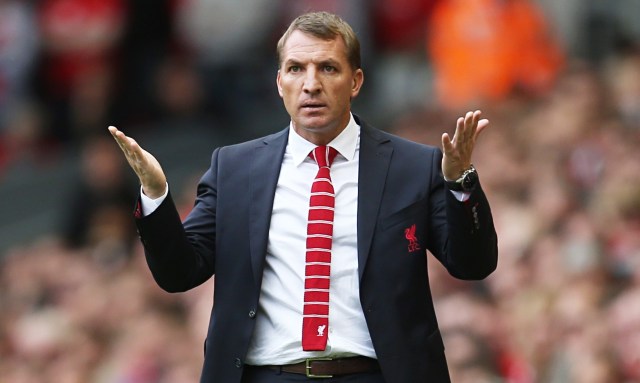
In my Premier League preview column I predicted that Liverpool would finish seventh, and argued that this was largely due to the ownership group of Liverpool, Fenway Sports Group, attempting to run a successful Ponzi scheme. I did so fully aware that these wouldn’t be popular opinions and or predictions. Nobody likes to be called naïve, and the prediction of another dire season swam against a riptide of optimism, the kind of defence mechanism that often besets supporters of any club coming fresh off a failed season.
Only six games into new the season and any enthusiasm Liverpool fans had that they’ll witness a prosperous season has been eviscerated, with the disenchantment and anger at last season’s debacle resuming with some fervour. Unexpectedly, within that backlash, some have finally recognised what is primarily responsible for this decline.
However, it’s still a minority. It’s easier to apportion blame by compartmentalising events on the pitch as a separate concern. From the owner’s perspective, that tradition is a gift. Plus, after the scarring experience of the Gillett and Hicks era, there’s probably an element of denial at play here. Many Liverpool fans simply don’t want to go through that experience again, so at this point believing they aren’t being duped is easier.
It should be noted that Rodgers is of course culpable to a degree. Had he not signed and preferred so many anti-footballers, generally betrayed common sense and his dossier, as he is now, Liverpool’s future under his and FSG’s stewardship wouldn’t seem so catastrophic. However, better quality of signings, selection policy and tactics would’ve only mitigated the damage that was being done by the Ponzi scheme. The Ponzi scheme can only function by placing specific financial and philosophical limitations, so that any manager or coach would find it hard to transcend them enough to meet expectations, realistic or otherwise.
Rafael Benitez, the last man to bring consistent success to the club, is often cited as an example by those who refuse to acknowledge the nefariousness of the ownership’s plan. He’s touted as someone who’d perform better in Rodgers’ place, as he did so before.
That the context of English football, namely the scale of its wealth and the widening of the financial disparity between even the so-called bigger clubs, has shifted significantly, even in just five years, is conveniently ignored, but that’s another debate not worth having.
Is Benitez a better manager than Rodgers? Yes, but even so many who take the position that Benitez would surely succeed with the resources Rodgers has enjoyed seem to have developed a form of selective amnesia. The symmetry of Liverpool’s last two declines after they narrowly failed to win league title, and what precipitated them, is startling.
Rafael Benitez had more success spending less, and ultimately operated under more trying circumstances. That explains the pining tone of these hypothesises in lieu of Rodgers’ tenure.
Back in the summer of 2009 Benitez, with a zero net spend, had to replace one of his best players in Xabi Alonso. Not only that, after narrowly failing to win the league the season before, he had to somehow make the team better to meet raised expectations. With no margin for error it’s no surprise that things deteriorated, and when they did, like Rodgers is now, Benitez didn’t help himself with defeatist rhetoric and queer tactical decisions.
Regardless of his own failings, retrospect has taught us that Benitez stood little chance. Now Rodgers isn’t being afforded the same luxury, or benefit of the doubt. I think it’s somewhat fair and understandable that he isn’t. He certainly doesn’t have the cachet of past successes that Benitez achieved, and achieved with Liverpool, to fall back on.
But the similarity, namely the loss of high calibre talent married with inflated expectations set against varying degrees of austerity, should provide sufficient evidence to those who fixate on a change of manager being the solution that they are wrong.
The basis of their argument is agonisingly simplistic. Too often it is glibly stated that Rodgers has had £300 million to spend and that another manager would’ve done better.
This argument might have significant merit if the next manager also wouldn’t be subject to the priority of monetising – basically a fancy word for selling – the club’s best players as soon as the owner’s valuation is met. Not only that, but there wasn’t an obsessive compulsive mandate to supress the wage bill at any short term cost, basically through a refusal to pay the wages required to attract top players or to keep those you already have.
Despite modern football being perverted into a disgusting form of extortion, which no doubt attracted FSG and their like to it, you have to admire how well FSG’s plan has been implemented to date.
‘We can compete with anyone’ said Tom Werner at the start, just what the fans wanted to hear. Then they cloaked their true intentions with the sanctimonious promise of their ‘do more with less’ model, knowing that they could revert to its universal appeal at any point. Spending relatively less is somehow seen as the antithesis of the oligarch/sugar daddy ownership model that encompasses the vulgarities and fickleness of modern football. Even better the myopic aversion to this marries beautifully with most notions of what the ‘Liverpool Way’ means – a revisionism of how the club’s historical successes were achieved fomenting a sense of pious idealism that any future successes must be earned, not bought.
In short FSG have pissed about experimenting with various structures and approaches, all of which failed to work quickly enough for them, before scaling back and focusing entirely on ways to make a significant profit.
To do this they brought in a young, relatively unproven manager, which lowered expectations. His inexperience meant they could give him minimum control over signings. They hired scouts, even branded it as a committee: “a synergy of informed opinions and philosophy” or whatever PR bollocks was used. Having given your manager little control over transfers, you can sell anyone, and he simply doesn’t have the authority or security to bluff you by threatening to leave. After all, having given him neither, he’s disposable.
If the young and inexperienced manager subsequently fails you cynically manipulate the situation with your actions implying that he’s to blame. This meant either sacking him, which incurs a financial loss, or giving him more control over player acquisitions, which costs nothing. Keeping him in situ means if he fails again, he’s the common dominator.
An even better virtue of making Rodgers a sacrificial lamb is he becomes a contingency, should such an event, mass fan dissention at poor performances and results, as we see now, arise. This insulates your money making scheme from scrutiny for another period of time. Bottom line, as profits go up, keep net spend the same every year. This means that the significant profits from the increase in domestic TV money, a slew of new ‘commercial partnerships’ that have been agreed, the increasing value of these sponsorship deals, and the expansion of corporate seating at Anfield, can remain untouched.
Selling star players for large sums helps. Here FSG exploit the fierce loyalty of the fans expertly, with press leaks that these players ‘want(ed) to leave’. The benefits of this demonisation are twofold; it imbues the illusion and or impression that a lot of money is being spent, and selling stars also saves you from having to pay them top level wages. Failing that, just refuse to pay them. Most players will agitate for a move – which fits the make them look ‘bad/disloyal/greedy’ template. Sending failed signings away on loan saves money too. Money saved is money made.
On that last point, did you know that Liverpool sent four players out on loan this summer, totalling almost £50m in transfer fees? One of those players, Lazar Markovic, cost £20m, and he was bought only a year ago. He’s also a winger, which left Liverpool with only one genuine winger in the squad, Jordon Ibe, who, at the time of writing, is nineteen and has less than twenty-five appearances for the club. A week ago at Old Trafford Brendan Rodgers resorted to using Danny Ings and Divock Origi, both strikers, and Roberto Firmino, a second striker, in wide positions. Not only does the Ponzi scheme relieve the club of its best talent, it also impinges on the plans of the manager and is likely to leave an unbalanced squad.
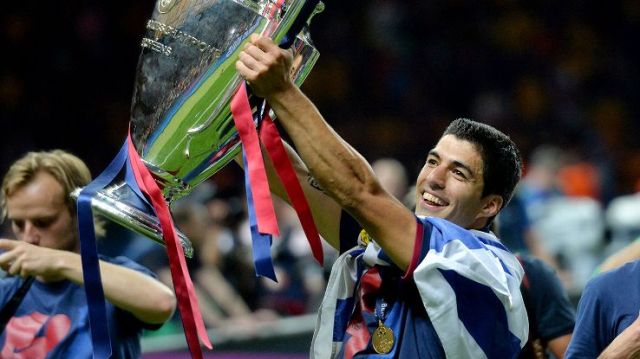
Looking back I wonder what the Liverpool fans who panted with glee at John Henry’s bravado “what are they smoking over there at the Emirates” in refusing to acquiesce to Luis Suarez’s alleged release fee clause, when Arsenal came calling two years ago, make of it now?
At the time that reaction was understandable. After many exasperating years under the timid and feckless guidance of David Moores, followed by the ghastly extortion of Hicks and Gillett, it was empowering to see the club finally act up to its size and reputation once again. Well, believing in that narrative was good while it lasted. John Henry only acted with such disdain because he was threatened with the loss of an asset for well below its market value. Luis Suarez was sold to Barcelona for significantly more money, via a release fee clause in his new contract, only a year later.
Why? Annually selling your best players is a natural life cycle for keeping costs down. It depletes the strength of the team and its chances of success, giving better players little reason to stay once they transcend the mediocrity that surrounds them. For example, Phil Coutinho, surely the next ‘victim’, or more likely, beneficiary, of the Ponzi scheme, has zero incentive to stay at Liverpool. Why stay to earn less, likely finish seventh or thereabouts and for Liverpool to show little immediate ambition to surround him with players of his calibre, when he’s clearly capable of playing for Bayern Munich or Barcelona and earning more money whilst doing it?
As we’ve observed consistently selling your best players is a universal formula for failure, as the money you do spend often becomes a futile attempt to make the team better, when you’ve started by making it worse. I’d imagine FSG’s intent was to ensure that, even with a high turnover of players, it retained enough talent on the club’s books to keep it on the fringes of contention to placate the fans and sponsors. In particular any talent that’s acquired must have the scope to significantly appreciate in value and be happy to develop at Liverpool, seeing and using it as a springboard to a bigger club.
To keep the Ponzi scheme alive and thriving is a difficult undertaking – talent must be purchased and developed coherently. But, by and large, Liverpool’s recent signings have been poor, and with the team struggling, there’s little individual development to be found.
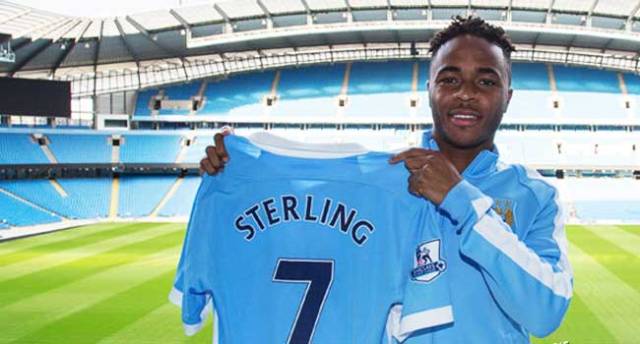
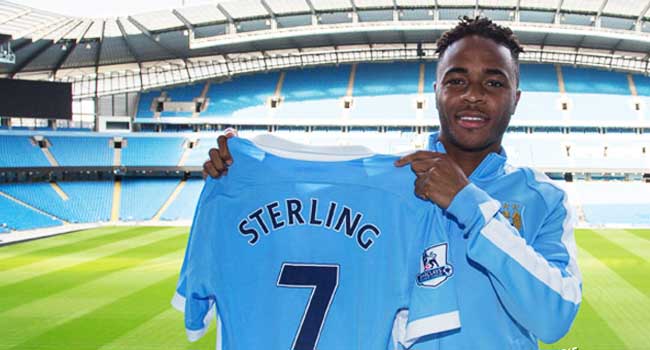
After the departures of Luis Suarez and Raheem Sterling for £125m, Steven Gerrard leaving for a semi-retirement beach holiday and Coutinho’s impending departure, there appears to be little of value left to sell. Throw in other sales and departures during Rodgers’ tenure, and now that £300m spent seems a wholly inadequate amount to keep the team competitive, never mind in title contention.
The least gifted players from the side that nearly won the league two years ago, and it could be argued, prevented it from succeeding, still remain, and it’s easy to see why. They’re cheaper to keep, and they have the least resale value on the market. In addition to the transfer policy of signing the young, unproven and cheap, the Ponzi scheme leaves you with Jordan Henderson as captain, and Simon Mignolet, with his clown-like coordination, in goal. Then there’s the contract extension given to the utterly woeful Martin Skrtel, whose perpetual dim wittedness and slow footedness have come to embody the current side. None of these moves made any sense, under normal circumstances. But having sold your best players, any subsequent errors, and they happen at every club, are compounded.
There’s a sarcastic misnomer that Americans consistently fail to grasp the concept of irony. Two years ago FSG stumbled upon something more valuable than money. Something that’s virtually impossible to replicate. But they didn’t value it enough.
And that reveals the truth, for a club like Liverpool to succeed they need to be run with a specific form of altruism. The kind which understands that in a subculture obsessed with money there are certain things that are more valuable than it.
Under FSG Liverpool Football Club is, both intentionally and unintentionally, now in a ‘managed decline’, and given its reference to the city of Liverpool during Thatcherism, I don’t use that term lightly. More specifically the club’s decline reminds me of a quote from season one of True Detective. Standing in a shithole town in rural Louisiana, its infrastructure decimated by the environmental and sociological scarring caused by capitalism’s predilection for opportunism, disposability and competition, Rust Cohle denounces it ‘as someone’s memory of a town, and that memory is fading’. Liverpool used to be a big club, but through successive ownership regimes that were either incompetent, motivated by greed, or both, it’s meekly surrendered that status. Even Istanbul was ten years ago, and now the lustre is fading fast. If FSG aren’t careful, and at the rate they’re going, soon there won’t be anything left worth selling. Not even the club’s name will mean anything anymore, and that really will cost them.


 Wichita Lineman Was A Song I Once Heard
You must be logged in to post a comment.