
Fargo – uniquely reimagined.

fargo header

First, a confession – I only finished watching both seasons of Fargo the television series this week. Had I read the reviews, which I don’t, yet in partial hypocrisy I’m writing one here (partial, as nobody will read this), I likely would’ve done so much sooner. While Fargo was remade, and in this case successfully reimagined, in a different format, tinkering with anything unique that already worked so well is, in my mind, inextricably linked to the current movie industry’s tiresome penchant for shitty remakes. Given the paucity of originality currently being transferred on to the big screen the last thing I wanted was to see was this culture of creative dearth, and laziness, creep into TV. So Fargo, the television show, didn’t get the benefit of that doubt for that reason alone.

Plus, when the movie Fargo came out in the mid-nineties I hadn’t seen anything else like it, how could it be done better? Sure, plenty other movies of the time incorporated black humour, but Fargo showcased it within human nature’s hedonistic predilection for devastating acts of savagery and fused it with Mother Nature’s nihilism. It distinguished itself tonally, with a pervasive sense of dread, emboldened by it being set during bleak midwinter. This dread accrued during the scenes where the earnest characters were speaking and behaving as so. You laughed at their strange Minnesotan and North Dakotian twangs and idioms whilst waiting for something bad to happen, and then you laughed when it did, as placed in these placid but barren contexts, the ultra-violence felt sudden, and a combination of surreal and slapstickish because of it.

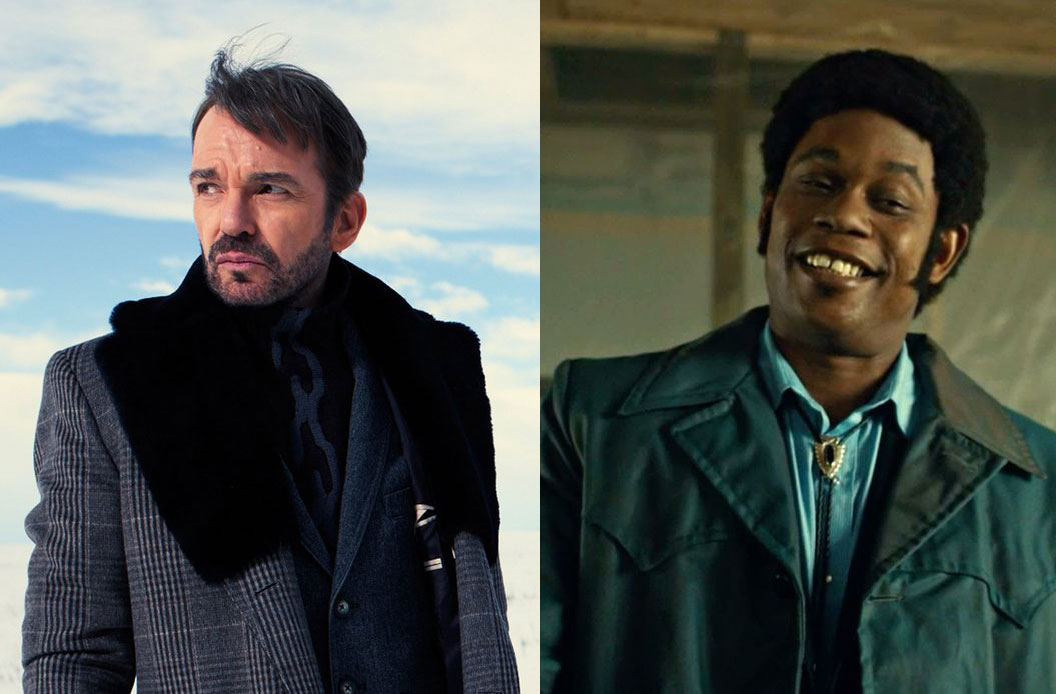
Even the most sceptical, like me, who watched season one of Fargo the television series would’ve come away impressed that it managed to retain the original film’s peculiarity, intrigue and humour over ten episodes. Better yet the additional scope of more screen time allowed the writers to develop a substantial narrative around Lester Nygaard’s metamorphosis. Billy Bob Thornton was terrific as Lorne Malvo, the psychotic, arrogant and ingenious hitman with an obsessive, but altruistic, interest in correcting human psychological weaknesses brought upon by sociological conditioning, using Nygaard as his latest test subject. Martin Freeman made Lester Nygaard’s transformation from meek to Machiavellian seem plausible despite all the early evidence to the contrary.
blumqvists

With season one a massive success and the narrative arc completed in line with the original movie, I was curious to see what season two would be. My initial doubts were assuaged by the quality of the writing and acting on display in season one, but then another arrived. The problem with TV shows is that when they’re successful, they’re compelled to make more episodes. Very rarely does the collective mass; the showrunner, production company and network, put the artistic sanctity of the show before the opportunity to make more money. There are exceptions, Rubicon for example, though perhaps it didn’t attract enough viewers and I’m a sucker for the spy genre, but most don’t. Take True Detective, it followed up one excellent season with a second that, while not unwatchable, was a muddle, and at times scarcely believable, with a convoluted plot that felt crammed within the confines of the eight episodes that so suited the first season.

Thankfully the second season of Fargo has avoided such pratfalls, impressively building a prequel around a conversational anecdote from Lou Salverson, who is a supporting character in season one. It also retained and transposed the intrinsic tonal elements and ingenious writing that is ingrained in the brand’s mythology and is its trademark.

Because the second season of Fargo is an entirely original piece, the writers had more artistic licence to create an odder veneer. It contains more surreal, hallucinogenic events, and due to it being a period piece, set in the late seventies, which like Mad Men before it, it contains many of the now considered antiquated mores that were common of the time. Male chauvinism is wielded as a running joke and heavily parodied after Floyd Gerhardt takes over the family crime empire. Often it is said among the mobsters trying to possess the Fargo territory, ‘she’s just a woman’ which, if it was the standard of time, would only need to be implied. This is a mild puncturing of reality to play to the audience, while others are far more peculiar; flying saucers affect events, and a self-psychological evaluation conjures a psychotherapist before us, and at a moment of probable crisis. That the real and the surreal mingle more freely makes things more interesting when you don’t know what will happen next, and overall, these unexplainable events are just ‘so Fargo’.

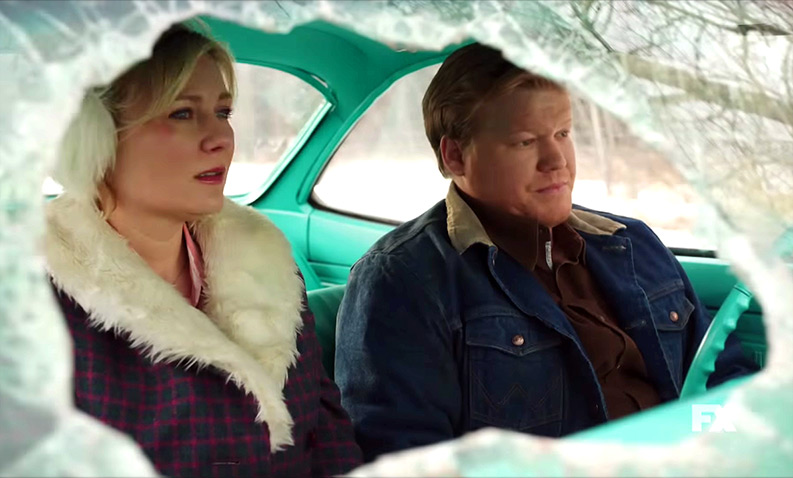
Where season two really takes a step forwards from season one is due to the volume of them, all of the characters retain an arcane quality. You’re given snippets here and there of their family history, hints at personal grievances and motivations, even shown flashbacks in history to partly explain why they are who they’ve become, but this isn’t enough, and it leaves you yearning for more detail, or applying it yourself. One wonders, for the purposes of season three, if this was done on purpose? There’s similar scope to centre a new series on a specific period or events from the pasts or futures of Mike Milligan or Hanzee Dent, as Lou Salverson’s past provided in season one. And who wouldn’t want to find out what happened and happens to Mike Milligan or Hanzee Dent?

Lou Salverson and his family history has now become an essential part of the show’s lineage, but their domestic misfortunes are the least interesting facet of the show because, provided you watched season one, you’re already aware of what happens there. It’s Salverson’s and Hank Larsson’s intrigue as to what really happened to Rye Gerhardt that, along with the Kansas City mafia’s insistence on acquiring the Fargo territory, drives the plot and intertwines the fates of all the characters.
milligan malvo

The Gerhardt crime family borrow from the Fargo template of clownishly psychotic criminals. And let’s face it – watching fools or vile characters unwittingly conspiring to seal their fates is highly amusing. It’s the crucial difference between how you view the two surviving Gerhardt heirs; Dodd, a self-entitled, arrogant imbecile who you’re inclined to view unsympathetically, and Bear, a brooding morass of misplaced loyalty and latent rage, is looked upon with pity. Meanwhile, the enjoyably annoying Peggy and Ed Blumquist are the kind of dissatisfied simpletons who might end up on Jerry Springer in an attempt to chase a vacuous dream life. Peggy and Ed and their journey throughout the series is clearly analogous with Lester Nygaard’s awakening from accepting that his drudgery and mediocrity is innate and therefore destined. That Peggy’s initial ambition ‘to do better this this’ is, in itself, uninspiring, and amusing, as is Ed’s increasing hubris with every accidental success and near miss that builds his equally fallacious legend as ‘the butcher’.

But not having Milligan around is a real loss. He recites passages from Jabberwocky throughout the series and in a tense exchange with Salverson he offers the best characterisation of the subtle form of hostility he’s received since his arrival in town.  After being questioned by Hank Larsson earlier that day he opines ‘I like you. I met another fella from Minnesota yesterday. A big guy. Sheriff, I think. I liked him too’. ‘We’re very friendly people’, replies Salverson, before Milligan, with an air of playful authority that just stays on the right side of being overtly threatening, ups the ante, ‘No, that’s not it. Pretty unfriendly, actually. But it’s the way you’re unfriendly. How you’re so polite about it. Like you’re doing me a favor’. It’s particularly hard to make a scene as tense, engrossing but unsettlingly suffocating as witnessing a group of Furries grinding to ghastly auto-tune pop at one of their harmless conventions, but they managed it here, and Fargo is full of similar sequences. The eloquent Milligan assumes much of the intelligence and insight displayed by Billy Bob Thornton’s turn in season one, while Hanzee Dent is as heartlessly ruthless as Lorne Malvo. That the writing team of Fargo can recreate this content in other characters bodes well for the show’s future.

A third season has already been ordered, and given that there’s now two seasons of evidence makes it far more of a certainty that we’re in for more great writing and acting. The only downside? We’ll have to wait until 2017 for it to air. It now makes me wish I had waited a bit longer to watch the first two seasons.

Posted in TV | Tagged , , , , , , , , , , , , , , , , , , | Leave a comment

Song Of The Day – Forms Six by Adsx

From the EP ‘Divided By Zero’ (2014)

Posted in Song Of The Day | Tagged , , , , , , , , | Leave a comment

Song Of The Day – It’s Alright Ma (I’m Only Bleeding) by Bob Dylan

From the album ‘Bringing It All Back Home’ (1965)

Posted in Song Of The Day | Tagged , , , , , , , , | Leave a comment

Essential Listening: Chill Out – The KLF (1990)

KLF chill out blog postGiven the title of this blog was chosen in reverence to a track from this album, and the background faithfully depicts its album cover, providing an impartial view of Chill Out’s true value becomes a problematic endeavour for me. Clearly I think it’s terrific.

But it’s not all peaches and kittens, as “Chill Out” is continuously dubbed a concept album. The term has always bothered me, particularly as most concept albums aspire to make a deeper connection through their music, with the intention that the idea that drove its creation and direction would become the subsidiary concern post-production. The term ‘concept album’ is a trite and lazily prescribed when a piece of work is viewed as experimental, or cannot be categorised under the jurisdiction of cemented genres. Therefore it now carries a certain stigma; it primes you to expect something esoteric, weird or abrasive. “Chill Out” is none of these things.

Chill Out’s construct isn’t new – it’s a continuous piece of music – combining the constituent pieces to imbue, or help create, depending on your point of view, its narrative; it’s a seamless mix of vocal samples, blissed chiming or lap steel over spacious choired ambiences, sound effects of all kinds and edits of classic songs that soundtrack an individual experience of journeying through the American south. Compositionally the forty-five minutes is too varied, spontaneous and random to be dismissed as just, just an ambient album. The idea the drives “Chill Out” carries too much scope and the effect of its execution is ubiquitous – a romanticised yearning for a specific time and place and or the notion is being somewhere better is an element which anybody can immediately identify with – to dismiss it so clumsily.

Of course anyone can conjure an idea, then attempt to assign it a suitable ambiance to flesh it out (Matthew Herbert, for example, released a thoroughly depressing, borderline masochistic, album about the entire life cycle of a farmed pig), the key part is pulling it off. And that’s where the context that surrounds both the KLF and “Chill Out” can produce doubts before the fact. I’m evidence of that. I was only a kid when the rave scene and acid house, the genres that much KLF’s discography belongs to, were at their height, so I suspect I wasn’t alone among the retrospective arrivals to the church who were expecting “Chill Out”, provided it wasn’t your first exposure to their discography, to be something other than what it was.

Because the KLF were anarchist pranksters, the question of whether Chill Out’s brilliance is intentional can be posed. Publicly burning a million quid on Jura during the aspirational nineties, money which was mostly made from the sales of “Chill Out” and “The White Room”, may lead some to conclude that it was all bullshit and “Chill Out” a highfalutin ruse to rope unsuspecting chin-rubbers into the KLF’s orbit. You could easily get too defensive on its behalf, and claim Chill Out’s random and illogical juxtapositions borrow from the surrealism of Albert Camus’ method, it analogously represents the KLF’s philosophical views that art, not money, matters most, and that therefore “Chill Out” was ‘intentionally’ posited as an antidote to typical KLF club kitsch, with the expectation that it wouldn’t sell well.

In truth it’s difficult to come up with a proper context to analyse something this sui generis. Trying to decipher the constituent elements of ‘Wichita lineman Was A Song I Once Heard’ requires the application of a highly presumptive context, as none of it appears to have anything to do with the song made popular by Glen Campbell. A loose metaphorical connection can be made between the lyrics; ‘I know I need a small vacation’ sang Campbell, while Bill Drummond’s comment is far more vague ‘I’m from somewhere, right here’. However, Drummond’s commentary does arrive after an jumbo jet takes off, indicating both a shift in tempo from the mellowness of the album’s first stanza, and implies nostalgia and or to belong to a specific time and place. A sense of excitement is created through an immersion of sound, as the breathless preacher evangelically rants over ravey beats and keyboard bars as the sound of train running over rails flits in and out, before it fades out with a fragmented commentary from a commercial scam of some kind.

After multiple listens the intrigue of the samples used, why they’re there and where they originate from, increases. I wanted to glean a deeper understanding behind the motivation for inserting random cultural vignettes, such as a local radio report of a car accident, was he alive or dead? Did he survive? Is it actually real? But thematically it becomes quite obvious why they’re there – as an additional layer of authenticity that helps us to visualise the trip. Even better, or impressively, some samples have no indigenous relation to the setting but offer a score that we believe could match someone’s mood in such a setting.

Applying Tuvan throat signing to ‘Dream Time In Lake Jackson’ works wonderfully. What does Tuvan throat signing have to do with the American south? Absolutely nothing, but its ethereal accent, while the assorted sounds of swamp nature salubriously beat throughout, and in particular the song culminating with the Tuvan throat singer’s high pitched crescendo, entices us to create an image of euphoric introspective calm at fulfilling the promise of finding true rural solitude and tranquillity.

The album cover is decidedly off-piste. Docile sheep sitting in a rural field you’d find in the UK’s generic temperate climate. It’s clearly relevant to the KLF’s genesis and willing status as perpetual outsiders. Such fields were the sort of place where raves were commonly held in the UK throughout the mid to late eighties, the closest we’ve seen to an earnest counter-cultural awakening since its progenitor. The sound of sheep wailing on ‘3am Out Of Beaumont’ promotes one of the KLF’s main mottos; their love of sheep (before they retired and sacrificed them, again, metaphorically), and that art is at its most interesting when it’s random and unpredictable, and so are the cultural juxtapositions that can occur when ideas aren’t willingly constrained.

It’s one of the main reasons why Chill Out’s overarching narrative is accessible and resonates; people are unafraid of artistic experimentation and reinvigoration when a level of cultural familiarity is offered as a compromise. Drummond and Cauty drive the point home by employing famous melodies throughout the album, which in their fragmented or altered state, are likely to evoke direct or indirect (borrowed) nostalgia.

The spaciousness found on ‘3am Out Of Beaumont’ is aided by the sound of sheep and the dulcetness of Fleetwood Mac’s ‘Albatross’, the sound of a small crop plane taking off at the start of ‘Magrugada Eterna’ encourages you to visualise vastness, imagery that marries with its sorrowful countrified lap-steel that ultimately morphs into a new version of Elvis’s ‘In The Ghetto’. But it’s the distorted version of seagulls wailing over Acker Bilk’s ‘Stranger On The Shore’ used on ‘A Melody From A Past Life Keeps Pulling Me Back’ (don’t they always?) that brings us the closest to Chill Out’s opaque message – the fickleness of personal nostalgia.

A nuanced reimagining of Elvis’s ‘In the Ghetto’, on ‘Elvis On The Radio, Steel Guitar In My Soul’ best emphasises the evocativeness of familiarity. The strings are isolated, with only the two lines from the original song cascaded and, of course, the sound of a train moving across rails remains in the background. Bound together it becomes like someone’s memory of Elvis’s song, and within Chill Out’s narrative, one that’s been tied to a specific time and place. As we’re still able to recognise it as the original ‘In The Ghetto’, its new form is something we can all identify with, as our memories of songs, and when and where we heard them, are unreliably personal, often differing from their actual construction.

With mainstream music being incessantly abused by artistic blandness and convention it’s good to know you can return to something whose uniqueness was designed to provoke a bespoke interpretation from each listener. But “Chill Out” does something better than that, it reminds us all, that provided music is offered ideas and they’re executed like this, it will continue to be interesting, even if it never truly changes.

Posted in Essential Listening | Tagged , , , , , , , , , , , , , , , , , , , , , , , , | 1 Comment

Song Of The Day – Sharpness by Jamie Woon

From the album ‘Making Time’ (2015)

Posted in Song Of The Day | Tagged , , , , , , , | Leave a comment