
Stranger Things – The X-Files meets the Goonies

stranger-things-header

Everyone’s experienced that specific frustration – an embittered envy that occurs when someone else has thought of something that should’ve been obvious to you before the fact. Take any ubiquitous modern technology; say Smartphones, they’re so practical and indispensable to everyday life that it’s hard to imagine how we didn’t think of them before they existed, and if we did, why didn’t we act on it? The new show from Netflix, “Stranger Things”, and its concept, evokes a similar irritation within me. Splicing the thematic intent, eeriness and nerdy intrigue of the X-Files with The Goonies halcyon nostalgia makes complete sense now.

But here’s the thing – creating a TV show that’s a homage to many cult movies and TV shows of years gone by isn’t quite as straightforward as developing a lifestyle product. The moral stakes are higher and it’s harder to pull off. If you create a bad product, it gets panned, probably doesn’t sell, and everyone moves on. If you make a bad show, well, that’s different, it’ll incite some serious scorn for a start. Why? Anyone brought up in the eighties and nineties, when television assumed such dominance over popular culture and entertainment, will likely have a fandom, or several, which they’ve personalised and therefore feel protective towards. There’s a fine line between originality and plagiarism, the line becomes blurred further when dealing with cultural property. This you’ve gotta get right.

Getting it right means giving people the clichés integral to all fandoms. Fandoms allow projection onto another sphere, usually through a characteristic that reminds us of ourselves or someone else, positing a character or something we’re likely to like or dislike, and or universal scenarios that we’re liable to associate with. “Stranger Things” covers all of these bases as it consumes, and assumes, the many elements of successful TV shows between when it is set – 1983 – right up until now.

The show starts by centring on The Goonies angle – a group of four misfit twelve year old kids who hang out together by cycling around or playing a dorky board game, virtually everyone over the age of thirty did one or either at that age. Some come from stable nuclear homes, others not so much. Then one of the four, Will, goes missing. The other three, Michael, Lucas and Dustin, endeavour to find Will, disobeying all the adult voices in the process – the most relatable of tropes.

In the fallout, we’re introduced to a plethora of folks and subjects that help build the plot and become central to events – a mysterious government facility is located near to where Will goes missing, and it lies on the outskirts of a quaint Indiana town which mirrors the stock spectrum of American life. We have the broken down, heavy drinking and pill popping anti-hero lothario sheriff Jim Hopper, who still retains his powers of perception. Will’s older brother Jonathan, the loner loser student who listens to The Smiths, The Clash and Joy Division, and takes moody black and white photographs, which today would put him in the wheelhouse of geek hypster chic, probably has a thing for the latently compassionate prom queen in waiting Nancy, Michael’s older sister, who dates the richer kid jerk, Steve. Steve has perfect hairspray hair and adorns the trite preppy fashion sense of early eighties jock materialism. He looks like the other one from Weird Science, namely the one that wasn’t Anthony Michael Hall, only fully post-pubescent.

Eventually an angelic girl with telekinetic type powers appears too, and she’s on the run from an immaculately coifed enigmatic scientist who appears to be behind all the oddness, played by Matthew Modine. He incorporates Karl Lagerfeld’s dress sense with Roger Sterling’s smug self-assuredness sans the biting verbosity. Much like the early incarnation of the X-files cigarette smoking man, initially he appears little, but when he does, it’s with devious or questionable intent. He works as an exposition meter for the strange goings on, the more he appears and speaks the more that’s revealed, yet anything that is revealed is perfectly couched by his vague doublespeak and odd platitudes.

Finally, there’s Will’s mum, played by Winona Ryder. Here they’ve cleverly wielded her historical roles in film as the outcast, and by borrowing the angsty teenage typecast she’s been most associated with, in Beetlejuice, Edward Scissorhands and Heathers, and transposed it into neurotic early forties motherhood. She’s physically frail, becomes even more mentally fragile after Will’s disappearance, where her sanity is questioned and her exposure to the narrative’s oddities is initially disbelieved by Jonathan and sheriff Hopper, before, as with her other famous turns, she resiliently rebounds. She also rebounds from her dreadful wig – that it’s the most absurd thing about the whole show is a strong indicator of how enjoyable and engrossing it is.

Even the opening credits are related to something that went before, promoting a garish gothic font akin to The Evil Dead. The beautiful bass heavy electro music used during the intro reminds me of that lovely Monotonprodukt 07 reissue from a few years ago, while the score is reminiscent of Close Encounters of the Third Kind.

Okay, so while there’s no extra-terrestrial stuff going on in season one of “Stranger Things”, as the poster on Fox Mulder’s office wall read ‘I want to believe’. Life is pretty mundane for most us, as it was for many of the characters in “Stranger Things” before it all started happening. Those of us who consider ourselves to be liberal and rational minded won’t openly admit it, but we all know it’s far more enjoyable to believe in the possibility of the fantastical, whether it be alien experiments on citizens covertly conducted by the government, or some other audacious eleventh of September style conspiracy theory. We know they aren’t real, and that most of them simply can’t be. But it’s far more interesting to dwell on them than the reality, which isn’t. Ongoing civil wars, waterboarding terrorists, terrorism, the demonization of minorities and immigrants and dogmatic occupations of foreign countries are tawdry, both in their application and social implication, of how we’re supposed to react – either complacently supporting the dogma, or to be insufferably outraged in a manner that’s piously tiresome. While these events are scandalous, we’re subjected to their subsidiary binary debates continuously, and this makes us desperate for variety in our escapism.

The writers and directors of “Stranger Things”, the Bunker brothers, know that folk enjoy escaping into simple narrative structures that work, as they allow scope, where intrigue can be piqued and then satiated. They also know that the medium of television and the genre of science fiction, when used correctly, is its own fandom. It offers the audience the license to believe in anything they choose with no fear of reprisals or public judgements.

Watching this show made me want to deliberately think of a concept that’ll allow me (and others) to do this more often, which means I probably won’t be able to. Still, at least someone was able to do it quite well. The bastards.
Posted in TV | Tagged , , , , , , , , , , , , , , , , , , , , , , | Leave a comment

Song Of The Day – Hard Working Man by András

From the album ‘House Of Dad’ (2016)

Posted in Song Of The Day | Tagged , , , , , , , | Leave a comment

Song Of The Day – Raga Bairagi by Ali Akbar Khan

From the album ‘Pre-Dawn to Sunrise Ragas’ (1967)

Posted in Song Of The Day | Tagged , , , , , , , , | Leave a comment

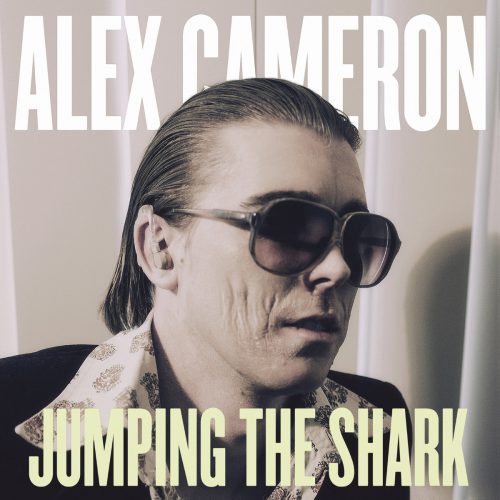
Essential Listening: Jumping The Shark – Alex Cameron (2014)

Jumping the shark header

Going by his Twitter feed Alex Cameron’s a poorly paid electronic musician and singer from Australia whose car is impounded in the US.

I’ve since found out his car isn’t impounded in the US, but his tweet that it was is amusing, and clearly those who’d listened to “Jumping The Shark” and know of him and the album’s intent would’ve gotten the joke.

What’s not so funny is that this album came out two years ago and until recently I had no idea it had. Thankfully I was listening to Charlie Bones’ NTS radio show on the day he just happened to have Cameron on as a guest, otherwise I’d probably still have no clue that he or “Jumping The Shark” existed.

However, my ignorance is somewhat logical, and it ties in with one of Jumping The Shark’s propositions – Cameron’s semi-fictitious positing as a struggling musician. With so many media platforms our means of consuming music has altered. Even if we, and yes, that includes me writing this column, weren’t all too busy fighting for various forms and levels of gratification on our media platform of choice, we’d still struggle to consume what we want how we want truly efficiently. An abundance of choice, married with the limitations of time, encourages us to choose from a smaller pool of it, and as a result the ocean of obscurity grows.

That’s why Cameron’s self-deprecatory insouciance in his relative anonymity is appealing, as was his releasing the album on the internet for free and making low budget videos featuring terrible dancing on an appropriately crappy car to accompany one of the album’s songs. All of them contradict the aspirational standard of the industry and wider culture.

But what about the album title “Jumping The Shark”? You’ll notice the present tense. I suspect it’s wholly ironic and autobiographic. Cameron is going one step further than just conflating fictional and (possibly) autobiographical perspectives and experiences into the vague characterisations found in his songs, he’s using the same disingenuous construct and barrier social media affords many of us as part of the creative process.

Sure, he’s taking the piss out of everyone, including himself, but Cameron gives a shit about what he’s doing. His brand of humour is dark and unrelenting in its proclivity for pound shop existentialism, when allied with the popularity of salubriously spacious electro-pop inflections and drum machine sequences it gives his material a better chance of trespassing on our meagre digital footprints.

Most of the sparse melodies that underpin all the album’s eight songs are a fittingly glib aesthetic for Cameron’s subject matter and online persona, and at times intentionally borrow from Mambo Kurt’s sarcastic amateurism. Sans Cameron’s dry croonery these arrangements wouldn’t appear out of place on the ignored Soundcloud or Bandcamp pages of bedroom producers in some guise, or forming part of a generic batch of templates that Rhianna, Madonna and Beyonce pay producers tens of thousands to come up with, freeing them up to promote the album, or, more likely, their brands.

Laugh all you like, and you will, but materialistic ennui and unfulfilled self-entitlement do encourage folk to start a new life on ‘The Internet’ to compensate. We’ve become so accustomed to seeing this process that it takes the form of a song, delivered from an introspective perspective, to remind us just how ridiculous the justifications for it often are. On ‘Mongrel’ a less austere sounding veneer belies its thematic purpose – comparing the startling chasms between the perception and reality of a relationship woven around opiate drug use through pre and post addiction experiences. Then there’s ‘Real Bad Looking’ where two loser stock characters, a drunken, trashy, ugly single mother and a flash douchebag, seek and ultimately fail to transcend their insecurities, character flaws and slovenly phenotypes.

But ‘The Comeback’ is the album’s gem. A line from it gives it its title and also inspires the album cover, which shows Cameron sporting a hearing aid with prosthetic skin over the cheeks distressed by years of stress and hard living. Cameron assumes the plight of a washed up TV show host who’s fighting back to keep what he’s earned and the loyalty he believes he’s due from the culture. Another over-used cliché, the five stages of Kübler-Ross, though not in chronological order, narrates his demise and helps build the suspense. He rants that digital media culture has rendered old-fashioned entertainment platforms and traditions obsolete ‘they don’t wanna see an old dog sing and dance/they’re done with television, and it aint getting a second chance’. His voice growls with anger as he derides a talentless James Corden like replacement ‘some fat-fuck crying with a song about diabetes’ and threatens to set Ahmed the ‘paralegal nightmare’ on them to resolve the matter. With the introduction of heavily modulated guitar chords and a doubling of the synth sequence in the studio version, and a sax accompaniment on the live version (both are excellent), the additional verbosity threatens a crescendo that never arrives. Anger and resentment, fragmented by bouts of bargaining, make you anticipate the final purge – a visceral act of some kind – only for it to dissipate cravenly, which appropriately mirrors the docility created by Carbon Monoxide poisoning, with a solemn soliloquy of suicidal despondency. He accepts his failure, but, resolute to the end, at least he ‘didn’t have to Jump The Shark to get my show back’.

You suspect that Cameron’s career (to date) on the fringes of popularity come in handy and help him wield empathy with the unempathetic. Despite this album being brilliant he’s playing to crowds of several hundred to a couple of thousand not tens of thousands. Aware of this, and after listening to “Jumping The Shark”, you’re placed vis-à-vis with the reality that life in the music industry, when spliced with modern technology and taste, isn’t fair. Just like all the characters in his songs you suspect Cameron’s reached acceptance, and he can cope because, unlike so many of us, at least he’s doing what wants, his way. Just as the failed stockbroker (surely based on Nick Leeson) from the song ‘Happy Ending’, who’s lost everything due to being seduced with procuring everything unfettered capitalism had promised him ‘by trading against the pound’, can see that his failure, in relative terms, isn’t really failure at all.

Maybe the album being reissued will have a validatory and corrective effect; Alex Cameron will get his car back, in the metaphorical sense, and this album will, at some point in the future, jump the shark and give us all a happy ending, because it’ll mean songmanship like this will have become the norm not the exception. Me? I probably haven’t helped the cause using this medium like this, but at least I bloody tried, man.

Posted in Essential Listening | Tagged , , , , , , , , , , , , , , , , | 1 Comment

Song Of The Day – Long Black Veil by Lefty Frizzell

From the album ‘Long Black Veil’ (1959)

Posted in Song Of The Day | Tagged , , , , , , | Leave a comment