
All the peaks of legendary acts from the sixties and seventies that you could mention – The Beatles, Bob Dylan, The Rolling Stones and Led Zeppelin – constituted a succession of flawless albums in short order.
For the Beatles their regal run starts with Rubber Soul through to their final album Let It Be. That’s a stupefying eight albums in five years! Such an output wouldn’t be feasible in this digitized era of doomscrolling and attention spans sequestered by social media. Take the Stones’ own fab four apex of Beggars Banquet (1968), Let It Bleed (1969), Sticky Fingers (1971) and Exile on Main St. (1972) as another example. Evidence that one of these albums is consistently less celebrated than another is scant.
But cultural consensuses can be tricky to pin down emphatically. Bob Dylan’s John Wesley Harding might offer an exception. It certainly doesn’t feel as though it receives the reverence of its chronologically approximate offerings Bringing It All Back Home, Highway 61 Revisited or Blonde on Blonde. Perhaps it’s just as simple as it coming last in that succession of albums, or that it was the first album recorded after Dylan’s motorcycle accident in 1966. Robert Shelton makes the case in his impeccable Dylan biography that Dylan’s exhaustion at his goldfish bowl fame began to make him prickly and withdrawn, sullied his enthusiasm and Joe Public could feel that. Here the retrospective analysis enters the chat – John Wesley Harding, and Dylan’s reclusiveness, became a symbiosis synonymous with the end of Dylan’s creative peak, a chink in the mythology that’s endured. Grossly unfair, but no less tangible.
Let’s add this as an exhibit to what I’d term the sandwich album phenomenon. Sandwiched, as in not quite an afterthought, but comparatively undervalued. Just as the earthly subtlety of a truffle and acorn fed Serrano Ham from Extremadura could be overpowered by sourdough slices belonging to a perfectly fermented crumb. The bread is the first and last thing to hit the palate. With Dylan the bread is Bringing It All Back Home and Highway 61 Revisited.
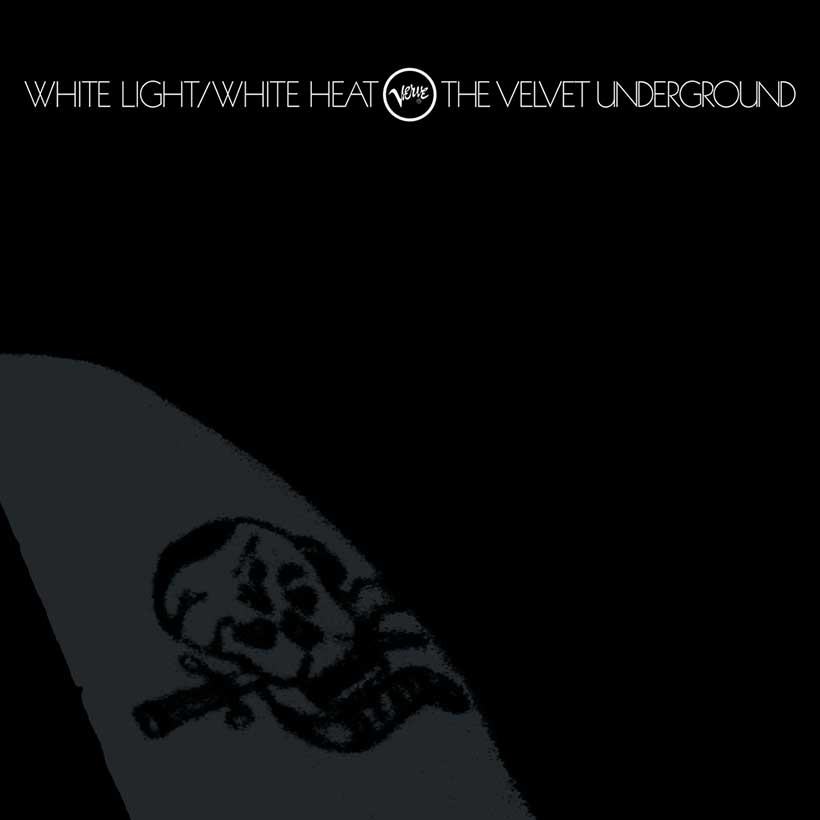
Timing and superficialities matter. So, albums, which are great in their own right, can get overshadowed by works of a similar standard that inadvertently better meet the cultural moment. The Velvet Underground & Nico, boosted by that iconic Warhol album cover, their self-titled third album The Velvet Underground and final album Loaded – the final two Reed centric albums serving as a template for the, dare I say, more accessible aesthetic found on the triumvirate of Transformer, Berlin and Coney Island Baby, which propelled Reed to a highly successful seventies solo career – combine to relegate White Light/White Heat as an afterthought in the VU Oeuvre.
Before carrying on and making the argument why this should not be, I want to state for the record that there was no fifth Velvet Underground album. It’s a myth, a fib, fake news, a JFK, Lord Lucan and Tupac teaming up to help fake the moon landing level conspiracy. If socialism is to finally make it and not just threaten to fake it, we owe it to each other to enact a test run and tap into the Stasi tradition. First, to manifest this as a collectively forced understanding, including spying and thought policing, so it then morphs into an incontrovertible truth. Said success of equality in equilibrium will ensure happiness.
White Light/White Heat is an essential work for reasons other than its immersive quality. It sits slap bang at an important historical intersection of musical evolution, is culturally and musically avant-garde, and marks the end of an era of band’s sound. The abrasiveness of White Light/White Heat contains the embryonic outline of punk before punk arrived, while the sonic haze, serving as the theme of the album, is a perfect ode to late sixties counter and drug culture and offers a simultaneous challenge to the ascendancy of Greenwich Village’s folk scene, the challenge itself also revering its essence.
It’s often claimed that hippy counterculture ended at Altamont in 1969 with that dude getting shot by bikers while the Stones were playing, but I’d argue White Light/White Heat was a truer demarcation point. It was the final Velvet Underground album with Cale as a member and as such is one of the last truly progressive sounding albums of the era. Even with Reed as the main songwriter, both The Velvet Underground and Nico and White Light/White Heat feel as though they belong to Cale’s inclination for compositional and sonic experimentation.
The album exemplifies that Cale and Reed were the perfect creative odd couple – see also Songs For Drella which they recorded in 1990 as a tribute to Andy Worhol. Sister Ray and I Heard Her Call My Name perfectly marry Reed’s knack for melody and Cale’s pursuit for a gnarly, chaotic and odd aesthetic. Both compositions sound as though they were recorded in some dank windowless studio that smelled of piss and sweat but were immaculately curated despite their surroundings. Sister Ray’s best facet is its malleability, over seventeen minutes long, it’s a jam session of raw energy and walls of sound which works in a number of settings; a dive bar, strip bar, an opium den, or a hippy commune.
The Gift confirms that Reed was a big Burroughs head. Its narrative is disarmingly absurdist in its initial banality – aided by using Cale’s heavy Welsh accent. Mundane observations and conversations run over a heavy grimy bass and Link Wray looping riff. Suddenly, with a contrarian twist, the scenario turns homicidal at the last.
Lady Govina’s Operation has become impressively prophetic. Transgenderism and gender reassignment surgery wasn’t exactly common in the late sixties, but is today. Transgender ideology certainly wasn’t, and this isn’t that, it’s too sophisticated and irreverent. Cale’s laconic delivery, scratchy guitar, another of Reed’s flawless moreish melodies, flat bass, and punchy drums create a dream or anesthetized drift. Matching the sensibility of a character navigating life, despite an irreversible life change – the operation – and being viewed as a peculiarity by society, with a carefree inevitability. Logic dictates that the trans-right mob should adopt it as their anthem. But, they’re really too pious, and, I wonder, do they know of White Light/White Heat?
I suspect the passing of time is also part of the sandwich album’s problem. Most music journalists are liable to be Millennials and Gen Z with a vested interest in pumping up contemporary offerings to suit the tastes of the zeitgeist and attract their clicks. I bet most under-thirty-fives likely haven’t heard of White Light/White Heat or bothered to try it – they’re all too busy listening to shite festooned by autotune. At best they’ll go for the Velvet Underground’s more renowned albums or some of Reed’s solo offerings.
Fortunately, every great cured ham will last quite a while, and White Light/White Heat still sounds more intriguing, is packed with more depth and detail than most stuff released over the past fifty years. It deserves not to be ignored, forgotten, go out of print, or sandwiched by a culture that increasingly only produces loaves of mediocre white bread.

 Wichita Lineman Was A Song I Once Heard
You must be logged in to post a comment.