
Most folk only truly start to worry about their own mortality when people in their age cohort start to die.
And it may be that the first one doesn’t set off the dread and fatalistic thoughts. For the obstinate hedonists denial runs strong. But as middle age begins to encroach there’s eventually a death that will force you across that Rubicon. It doesn’t need to be someone famous either. I’d argue the effect is liable to be more potent if it’s someone that you know, you see often, you work with, especially if it’s a family member or friend. Clearly, I’ve been fortunate that nobody I know that’s my age has departed suddenly, yet.
I mention this as D’Angelo (real name Michael Eugene Archer) died earlier this month. He was only fifty-one. Only a few years older than me. That’s the first time I felt the sense of narcissistic unease at my advancing years and the increasing frailty that comes with it; will I still be around at fifty-one and in what physical state?
The initial surprise that a fifty-one-year-old man had died was eroded by the revelation that D’Angelo was gravely ill with cancer. While not a recluse, he was someone who was able to retain a reasonable level of privacy by not chasing the fatuous trappings and petty aspects of fame. We simply had no idea he was ill. When Charlie “The Machine” Sheen departs nobody will be surprised, and was anyone really shocked that Steve Irwin died by nature’s hand? The how, perhaps. That’s the enduring lesson with any death we find surprisingly sudden, particularly celebrity deaths, they may have reputations of hard living, chemical self-abuse, indulge in dangerous pursuits and pastimes, but these are often irrelevant to when. We’re all susceptible, at any minute.
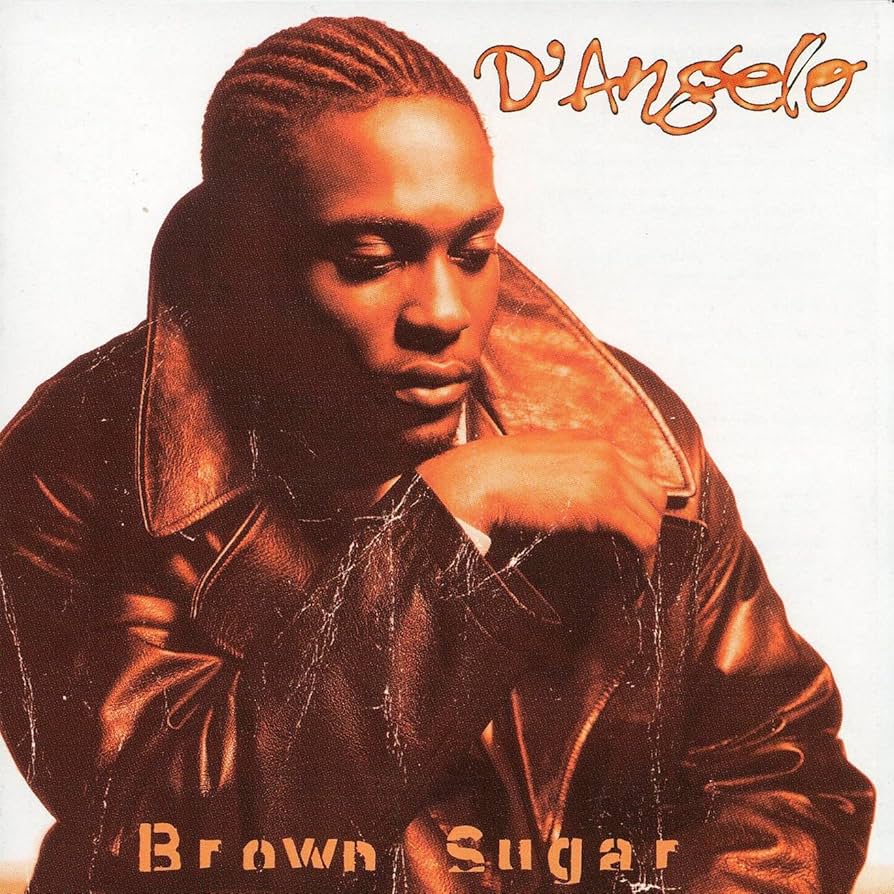
Not to be greedy and continue with the self-centred theme, but it makes you wonder if we were deprived of another D’Angelo album. David Bowie at least got Blackstar finished before he succumbed. The doubt here is that D’Angelo wasn’t prolific. He only released three studio albums spanning twenty years. Bob Dylan, The Stones and The Beatles released one, sometimes two, a year in their pomp. Sustaining such abundance can be viewed as a positive or a negative. The common negative often being once great bands or musicians sullying their legacies with dross albums having run out of ideas. D’Angelo belongs in the former category, his discernment means there’s no filler in the catalogue. Listening to all three of his brilliant albums repeatedly over the last couple of weeks, Brown Sugar, his first, is not only my favourite, but I also firmly believe his best. Black Messiah, his final album, will appeal to some thanks to a funkier orientation. Voodoo will certainly be the one he’s renowned for and synonymous with – it was platinum several times over, a number one record in the US and made his name ubiquitous in the mainstream.
Brown Sugar has two distinct advantages over his other two albums, time and context. It was recorded in 1995. This was a glorious time for music generally but it’s close to an inflection point. We were reaching the end of a golden era of music which ran from the mid-sixties to the millennium, so there’s a tendency for me and people of my generation to excessively venerate the end of this period. What’s beyond dispute is Rap and R&B were king and in their heyday in the nineties. It was before all that fucking autotune and Atlanta trap dross converged, became vogue and ruined the genre. Back in the day you had Tupac and Biggie beefing. You didn’t have to hide that fact that you owned records that had writing or production credits belonging to Sean Combs and R Kelly. West Coast Rap was put on the map with G-Funk and Death Row Records. East Coast Rap was in its pomp too (be it Wu Tang, Mobb Deep and Gangstarr or progressive rap acts De La Soul, Brand Nubian and Tribe Called Quest). Early OutKast remains the best OutKast, and quality R&B acts were plentiful and hits as frequent as during the Motown era. And who didn’t love Blackstreet, Erykah Badu, TLC, Missy Elliott et al?
Brown Sugar induces febrile nostalgia because it’s sonic aesthetic is wholly nineties and sits comfortably in the zeitgeist of that era. It unashamedly taps into New-jack swing on “Smooth” and “Jonz In My Bones”, but most of the album’s influences are rooted in the soul and singers of the seventies and sixties. The organ on “Higher” is very Al Green gospel inspired and of course there’s a rather nice cover of Smokey Robinson’s “Cruising”.
The track which is also the album’s title is no Rolling Stones cover, but is as an ode to his partner Angie Stone, who also died too young and compositionally the bass and drums is reminiscent of “Sweet Sticky Thing” by Ohio Players. The more bass prominent “Alright” wouldn’t be out of place on Prince’s The Gold Experience and the brass on “When We Get By” is very the Sign o’ The Times. The vocal delivery on “Higher” is also very Prince Rogers Nelson. I say lifting from the best is a sign of great taste.
I advise you get the deluxe edition. Even though Brown Sugar was only reissued in 2017 it surely will be again soon with D’Angelo’s death. The extra tracks on the 2017 deluxe reissue are all sublime and will surely make the cut on the next reissue. The acapella of “Me And Those Dreamin’ Eyes Of Mine” emphasises the distinctiveness of D’Angelo’s delivery – a combination of Donny Hathaway’s warmth but also silky potency on the high end, evoking Marvin Gaye, both here and on “Lady”.
D’Angelo was unlucky to go at fifty-one, but he does leave behind Brown Sugar as part of an impeccable musical Hors d’oeuvre, and, as a musician, that makes him one of the fortunate. Will I be fortunate to leave behind something truly worthwhile? Probably not. Most of us don’t beyond our children, but at the very least I intend to leave behind a vinyl of this album to someone, even if it’s to some random in a charity shop. Thanks to D’Angelo I can pretend that’s altruistic. Salut.

 Wichita Lineman Was A Song I Once Heard
You must be logged in to post a comment.